
 L R Bureau
Heroes From The History
“Commemorating 50 years of Sardar Vallabhbhai Patel’s vision for nation-building through a comprehensive national policy — Rashtraneeti.”
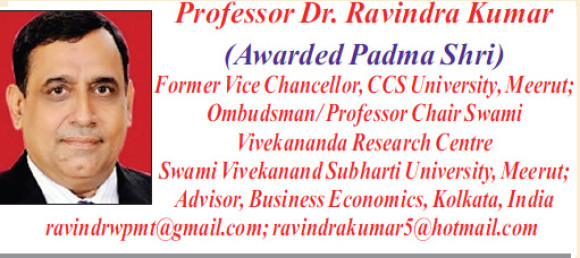
Few leaders in modern Indian history have left behind a legacy as enduring and monumental as that of Sardar Vallabhbhai Patel. Revered as the “Iron Man of India,” Patel was far more than an astute administrator or a powerful political figure. He was the architect of national unity, the guardian of internal stability, and the statesman who transformed a newly partitioned and deeply wounded nation into a politically integrated Republic. His journey from serving as India’s Home Minister to becoming one of the greatest nation-builders of the twentieth century remains unparalleled in the annals of Indian governance.
On September 2, 1946, under the provisions of the Cabinet Mission Plan, Patel joined the Interim Government led by Jawaharlal Nehru as the Home Minister and Minister for Information and Broadcasting of undivided India. The Muslim League was initially absent from this government, which was tasked with steering the country through the turbulent final phase of colonial rule. Following independence and Partition in 1947, Patel became India’s first Deputy Prime Minister while retaining the Home portfolio and assuming charge of the Department of Princely States.
At a time when India stood fractured by communal violence, displacement, and political uncertainty, Patel emerged as the strongest pillar of national consolidation. His achievements during a period of barely four years in office remain astonishing in scale and significance. The integration of more than 550 princely states into the Indian Union, the establishment of a stable administrative framework, the rehabilitation of millions displaced by Partition, and the safeguarding of internal security together form one of the greatest chapters in India’s nation-building process.
History often celebrates Patel for the integration of princely states, but his role as Home Minister deserves equally profound recognition. The office he occupied was not merely administrative; it became the nerve centre of India’s survival during its most vulnerable years. Patel understood that independence without unity would remain incomplete, and unity without internal stability would be fragile. Therefore, he treated national integration not as a political exercise but as a civilisational responsibility.
Within the Indian National Congress, Patel was among the most influential leaders, commanding immense respect within the party organisation. Although Nehru led the Interim Government, Patel’s authority and organisational grip made him indispensable. It was precisely because of this stature that he was entrusted with the Home Ministry, the most crucial department during a time of communal upheaval and constitutional transition.
The political climate of 1946 was deeply volatile. The Muslim League, after initially boycotting the Interim Government, decided to join it in October 1946 as part of its larger political strategy. This development immediately triggered debate over which major portfolio should be assigned to League representatives. Viceroy Lord Wavell and Maulana Abul Kalam Azad reportedly favoured handing over the Home Ministry to the League. Mahatma Gandhi and Nehru remained largely silent on the proposal.
Patel, however, firmly resisted the move. He had closely observed the League’s political intentions and was deeply aware of the dangers such a transfer could pose. Statements by League leaders openly declaring their intention to paralyse the functioning of government to hasten the creation of Pakistan had already alarmed him. The horrors unleashed after Muhammad Ali Jinnah’s call for “Direct Action Day” on August 16, 1946, especially the communal massacres in Calcutta and elsewhere, had reinforced Patel’s understanding of the fragile national situation.
He also witnessed the misuse of power by the Suhrawardy-led Bengal government during the riots. These developments convinced Patel that surrendering control of internal security at such a critical juncture would endanger the very future of India. Consequently, he took an uncompromising stand. As later recalled in historical accounts and interviews, Patel declared unequivocally that he would rather resign from the Cabinet than relinquish the Home Ministry.
This firmness was not born out of personal ambition; it emerged from his sense of national duty and political foresight. Events would soon prove him correct. Eventually, the Finance Ministry was handed to Liaquat Ali Khan, whose policies frequently obstructed governmental functioning and intensified tensions within the Interim Government. Patel’s apprehensions regarding the League’s disruptive strategy were vindicated.
Yet, despite enormous political pressures and unprecedented violence across the subcontinent, Patel carried out his responsibilities with extraordinary efficiency. After Partition, India faced one of the largest human migrations in recorded history. Millions crossed borders amidst bloodshed, fear, and uncertainty. Refugee camps had to be established, relief measures coordinated, and communal riots contained. Patel approached these crises with remarkable decisiveness and administrative discipline.
More significantly, he understood that political fragmentation posed a grave threat to India’s sovereignty. At independence, hundreds of princely states enjoyed varying degrees of autonomy, and many remained uncertain about joining India. Patel, working closely with civil servant V.P. Menon, launched one of the most extraordinary diplomatic and political integration campaigns in modern history. Through persuasion, negotiation, strategic pressure, and where necessary, limited force, he ensured that princely states acceded to the Indian Union.
The integration of states such as Hyderabad and Junagadh demonstrated not only Patel’s firmness but also his unwavering commitment to national unity. Without his leadership, India may well have emerged as a patchwork of fragmented territories rather than a cohesive republic. In this sense, Patel did not merely preserve India’s unity; he created the conditions necessary for its democratic future.
Interestingly, critics of Patel at the time underestimated the importance of the Home Ministry itself. Leaders such as Wavell and Azad argued that since law and order largely fell under provincial governments, the Union Home Ministry would hold limited practical power. Patel disproved this assumption completely. By effectively coordinating internal security, refugee rehabilitation, administrative restructuring, and the integration of princely states, he demonstrated the immense strategic importance of the Home Ministry in shaping the destiny of independent India.
His tenure established enduring benchmarks for governance. Patel believed in a strong but accountable state, disciplined administration, and national interest above ideological divisions. He was pragmatic rather than rhetorical, decisive rather than symbolic. While many leaders inspired the imagination of the masses, Patel inspired confidence in the survival and stability of the nation itself.
Today, as India continues to debate questions of national unity, governance, federalism, and internal security, Patel’s legacy remains profoundly relevant. He embodied the rare combination of political realism and patriotic idealism. His contributions cannot be measured merely through titles held or years served in office. Rather, they must be understood through the enduring stability and unity he secured for a nation emerging from the trauma of Partition.
Sardar Vallabhbhai Patel’s transformation from Home Minister to nation-builder was not accidental; it was historical inevitability shaped by courage, foresight, and an unwavering commitment to India. More than seven decades after independence, his achievements continue to tower above political comparisons. In the true sense of the term, Patel was not merely India’s first Home Minister — he was one of the principal makers of the Indian nation itself.