
 Dr. Shikha Mishra
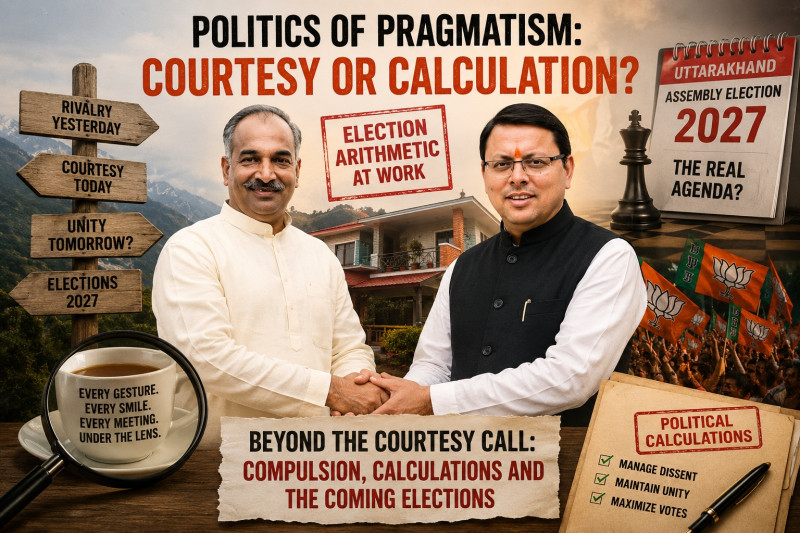
From Viral Feuds to Public Smiles: The BJP's Election-Year Peace Formula
Dr Shikhha Mishra
Editor, Lead Reporting (English Weekly)
Ph.D. & M.Phil. in Journalism and Mass Communication
Editorial experience with—The Indian Express, The Pioneer & Hindustan Times
A seasoned journalist, senior media educator, Media & Communication Researcher
Author and Patent Holder
Politics often teaches a lesson that no textbook can possibly make one learn like there are no permanent friends and no permanent foes—only permanent interests. It can be branded as a hypocritical kind of Political pragmatism specially when elections begin appearing on the horizon, even the coldest political winters can suddenly give way to springtime warmth.
Adding to another chapter in Uttrakhand’s ever-evolving political saga, the sudden affection between CM Dhami and BJP MLA Arvind Pandey seems more by compulsion and election arithmetic than the real cordial optics visible on the surface.
The buzz around this development gained momentum after Uttarakhand Chief Minister Pushkar Singh Dhami's recent visit to the residence of Arvind Pandey in Gadarpur. Although it was officially branded as a courtesy call but in politics even courtesy often carries a motive. After inspecting preparations for an international kayaking and canoeing event, the Chief Minister did not only meet Pandey but also met his family members, interacted with children, and conveyed his best wishes.
Every handshake is scrutinized, every smile is measured, every photograph is enlarged, zoomed in, and examined as if it contains classified state secrets in politics. A cup of tea is rarely just a cup of tea; it is often interpreted as a coalition, a compromise, a warning, or a peace treaty.
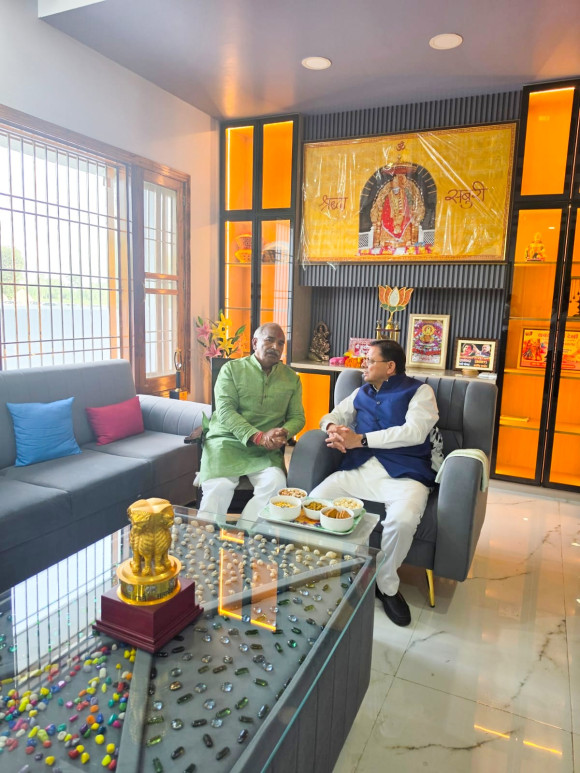
BJP High Command’s formula of unity and Cajolement
Most significant part of the story is that both Pushkar Singh Dami and Arvind Pnadey hail from Kumaun Region; it means any conflict between them sends the signal that not everything is rosy in Kumaun’s politi‑soap opera. So to make the picture‑perfect for the party poster; BJP high command appears to be doing brisk backstage choreography to ensure both Chief Minister Dhami and MLA Arvind Pandey remain useful stars for the 2027 electoral run.
Undoubtedly, a considerable amount of cajolement and political maneuvering lies behind the mandated smiles designed to project an image of harmony within the BJP. That’s the need of the hour because people can’t easily forget about the so called Viral Letter allegedly accusing Dhami of four years of “conspiracy and neglect,” by Pandey. Beside that the viral letter also mentioned suspected threats to Pandey’s son, alleged fake cases, pressure on traders and pliant media, and even claims of life‑threats which might have furnished a season’s worth of headlines. Yet after the national president Nitin Nabin’s Dehradun sortie and a carefully staged handshake suddenly changed the entire political scenario. The message ordered from BJP High Command is simple: “All friends, no fights.” It’s classic electoral housekeeping: neutralize dissent, tidy up messy local scores, and send a unanimous signal of harmony to voters while quietly reminding regional actors that party unity, not personal grievance, will decide whose ambitions survive the High Command’s calendar.
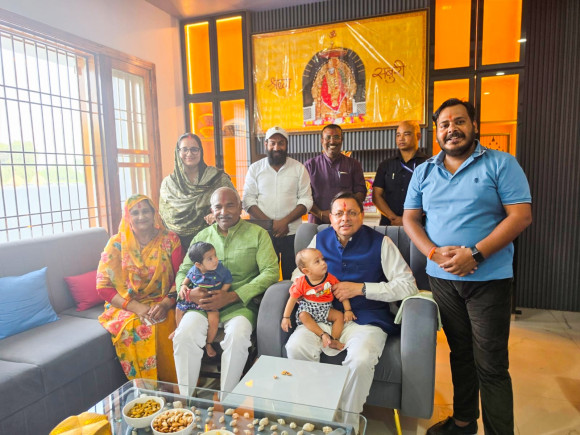
Observers of Uttarakhand politics know that differences of opinion among leaders are neither unusual nor alarming. Democracies thrive on debate, competition, and occasional disagreements. Political leaders frequently find themselves on opposite sides of organizational questions, policy discussions, or leadership decisions. Yet politics also has a remarkable ability to transform yesterday's critics into today's companions and today's companions into tomorrow's critics.
That is precisely why this visit generated attention far beyond its official purpose. Some saw it as a signal of reconciliation. Others viewed it as a display of organizational discipline. Still others interpreted it as a reminder that as electoral challenges approach, unity often becomes a strategic necessity rather than merely a desirable virtue.
After all, political parties, much like families, occasionally discover that internal disagreements are best handled behind closed doors when larger battles lie ahead.
The timing naturally invites speculation. With the next Assembly election drawing closer, every major political formation is keen to project cohesion, confidence, and collective purpose. In such circumstances, public displays of goodwill acquire significance that extends beyond personal courtesy.
Of course, seasoned political observers will continue doing what they do best—reading between the lines. Some will search for hidden messages in body language. Others will attempt to calculate who gained more from the optics of the meeting. A few may even conclude that the most important conversation was the one that never appeared in the official press release.
Yet there is another interpretation that deserves consideration. Perhaps the episode simply demonstrates a reality often forgotten in today's hyper-polarized political environment: politicians are capable of disagreeing without becoming permanent enemies. They can compete for influence, challenge each other within party structures, and still share a conversation over tea the following week.
The real satire lies not in the leaders themselves but in the expectations surrounding them. Supporters often demand unwavering loyalty, critics expect perpetual conflict, and social media prefers dramatic rivalries over mundane cooperation. Reality, however, is usually less theatrical and considerably more practical.
Politics, particularly electoral politics, rewards pragmatism. Leaders who understand this survive. Those who do not often find themselves studying the art of political reconciliation sit on the opposition benches.
Whether the Gadarpur visit represents a genuine thaw, a strategic pause, or simply a courteous social interaction is a question that only time will answer. For now, it serves as a reminder that democracy operates through both competition and accommodation. And if politics is indeed the art of the possible, then an unexpected visit may sometimes be just as important as a fiery speech.
As election season gradually approaches, Uttarakhand's political class appears to be sending a familiar message: disagreements may come and go, but unity—especially when votes are at stake—has a remarkable way of finding its place on the calendar.