
 Dr. Shikha Mishra
Minimally invasive heart repair marks a major milestone in advanced cardiac care for the state
Dehradun: In a landmark achievement for cardiac care in Uttarakhand, Sri Mahant Indiresh Hospital has successfully performed the state’s first Mitral Transcatheter Edge-to-Edge Repair (TEER) procedure. The minimally invasive technique, considered a cutting-edge advancement in modern cardiology, offers a viable alternative to open-heart surgery for patients suffering from severe mitral regurgitation who are at high surgical risk.
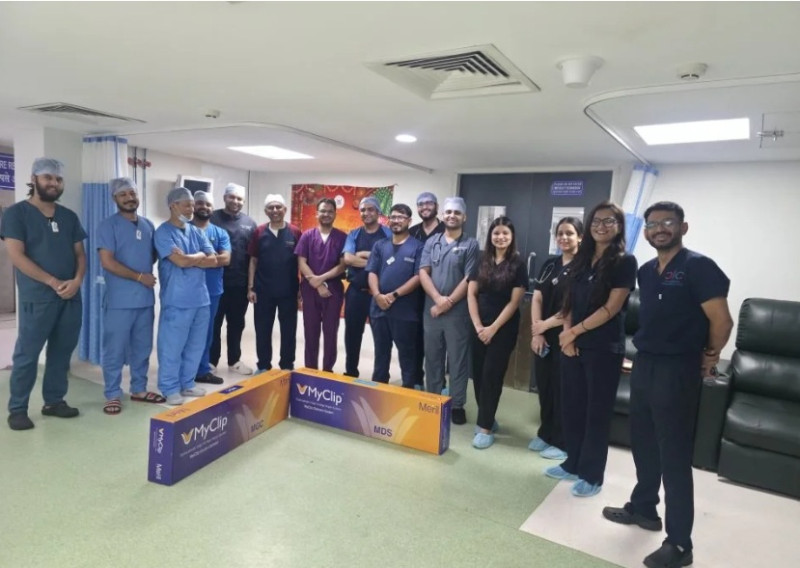
The procedure, carried out by a multidisciplinary team led by Dr. Tanuj Bhatia, Head of Cardiology, and Dr. Ashok Jayant, Head of Cardiac Thoracic Vascular Surgery (CTVS), marks a significant expansion of the hospital’s Structural Heart Disease Programme. The patient, who underwent the TEER procedure earlier this week, has shown rapid recovery and has already been discharged.
A Minimally Invasive Breakthrough
Mitral TEER is a catheter-based intervention that uses a specialised clip system to bring the leaflets of the mitral valve closer together, effectively reducing valve leakage without the need for open-heart surgery. This approach is particularly beneficial for elderly patients or those with comorbidities who are not suitable candidates for traditional surgical valve repair.
Dr. Bhatia explained that the procedure represents a major leap forward in interventional cardiology. “For patients with severe mitral regurgitation who are at high risk for surgery, TEER offers a life-saving option with significantly lower procedural risk and faster recovery,” he said.
A Collaborative Effort
The success of the procedure was the result of seamless coordination among multiple specialised teams, including structural heart specialists, cardiac anaesthesiologists, echocardiography experts, cath-lab technicians, and nursing staff. The collaborative effort underscores the hospital’s growing capability to handle complex cardiac interventions with precision and care.
Hospital Chairman Shrimahant Devendra Das Ji Maharaj congratulated the entire cardiology team on this achievement, terming it a “proud moment for Uttarakhand’s healthcare sector.” He emphasised the hospital’s commitment to bringing world-class medical technology to the state and ensuring that patients no longer need to travel outside Uttarakhand for advanced cardiac treatments.
Expanding Capabilities at SGRR Institute
The successful TEER procedure is the latest in a series of advancements at Sri Guru Ram Rai Institute of Medical and Health Sciences and Sri Mahant Indires Hospital. The cardiology department now boasts two cardiac catheterisation laboratories equipped with advanced imaging technologies such as IVUS (Intravascular Ultrasound), OCT (Optical Coherence Tomography), and NIRS (Near-Infrared Spectroscopy).
These facilities enable the hospital to perform complex coronary interventions, transcathter valve procedures, and intracoronary imaging with high precision. Additionally, the department has expanded its academic and training programmes, increasing the number of DM Cardiology seats to six in 2026, thereby strengthening the pipeline of skilled cardiologists in the region.
A New Chapter in Cardiac Care
With the introduction of Mitral TEER, Sri Mahant Indires Hospital has solidified its position as a leader in structural heart interventions in North India. The hospital’s cardiology department, already known for its advanced interventional capabilities, has now added another critical service to its portfolio, offering hope to patients who previously had limited treatment options.
Dr. Bhatia noted that the hospital plans to further expand its structural heart programme, including the introduction of additional transcatheter valve therapies in the near future. “Our goal is to make Dehradun a hub for advanced cardiac care, where patients from across Uttarakhand and neighbouring states can access the latest treatments without having to travel to metros,” he said.
Implications for Uttarakhand’s Healthcare Landscape
The successful execution of the TEER procedure in Dehradun has broader implications for healthcare accessibility in Uttarakhand. Historically, patients requiring advanced cardiac interventions had to travel to Delhi, Chandigarh, or other major cities, incurring significant costs and logistical challenges. With this development, the state now has a local facility capable of delivering world-class cardiac care.
Healthcare experts believe that such advancements will not only improve patient outcomes but also reduce the burden on tertiary care centres in other states. Moreover, the availability of advanced training programmes in cardiology will help address the shortage of specialised medical professionals in the region.
A Testament to Medical Progress
The successful Mitral TEER procedure at Sri Mahant Indires Hospital is a testament to the rapid progress being made in medical technology and its adoption in regional healthcare settings. It reflects a growing trend of tier-2 cities in India becoming centres of excellence for specialised treatments, thereby democratising access to advanced healthcare.
As Uttarakhand continues to invest in medical infrastructure and talent development, initiatives like the TEER programme will play a crucial role in ensuring that high-quality healthcare is within reach of all citizens, regardless of their geographical location.