
 Dr. Shikha Mishra
Helpline Activated for Uttarakhand Citizens in Nepal
Lead Reporting
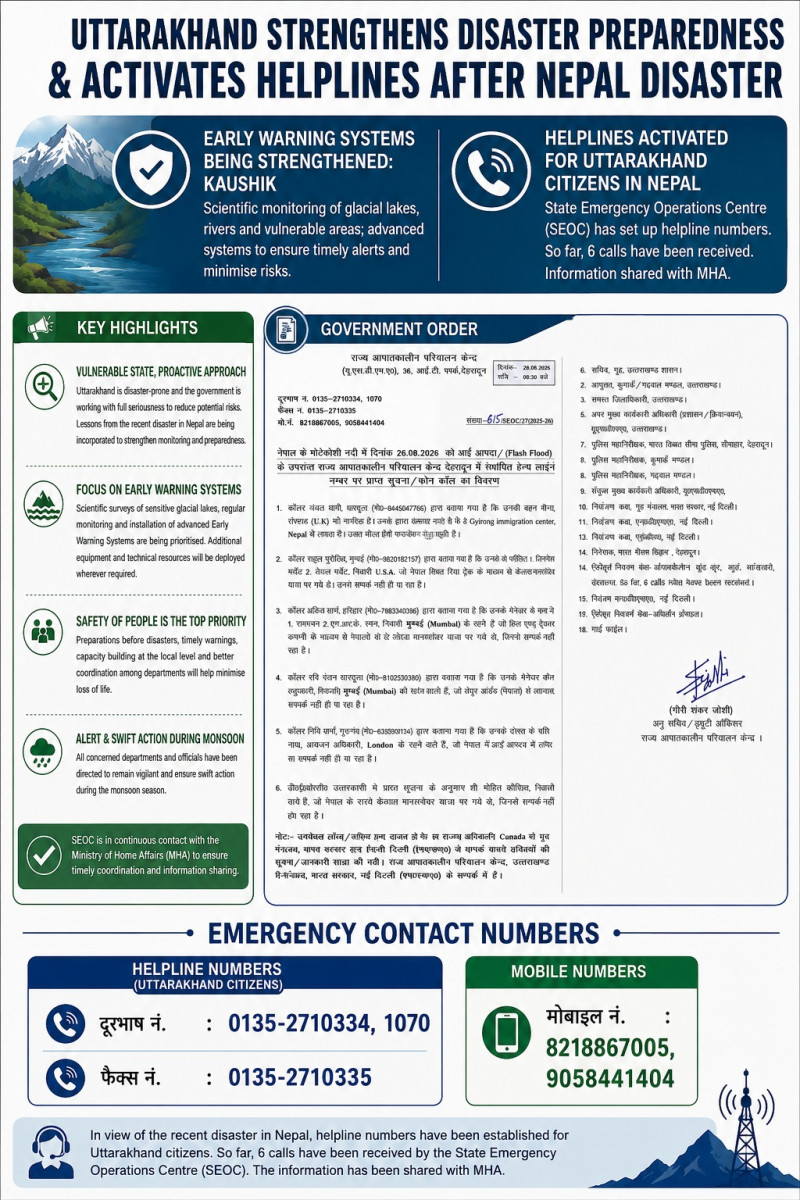
Dehradun: Uttarakhand is strengthening its disaster preparedness and early warning mechanisms in vulnerable areas following the recent devastating disaster in Nepal, Disaster Management and Rehabilitation Minister Madan Kaushik said.
Recognising Uttarakhand’s vulnerability to natural disasters, the state government is placing greater emphasis on scientific monitoring of glacial lakes, rivers and other sensitive areas, along with the deployment of advanced early warning systems to minimise risks and protect lives.
Kaushik said lessons from the disaster in Nepal were being incorporated into the state’s preparedness strategy. Vulnerable glacial lakes will undergo scientific surveys and regular monitoring, while additional equipment and technical resources will be provided wherever necessary. The objective is to ensure that any indication of an impending threat reaches both the administration and the public in sufficient time for preventive action.
Helpline Activated for Uttarakhand Citizens in Nepal
Following the severe disaster in Nepal, the State Emergency Operations Centre (SEOC) had established dedicated helpline numbers for Uttarakhand citizens who might require assistance or information.
According to Vinod Kumar Suman, Secretary, Disaster Management and Rehabilitation, the SEOC has so far received six phone calls through the helpline. The information received through these calls has been shared with the Ministry of Home Affairs (MHA).
Suman said the SEOC has also remained in continuous communication with the MHA, ensuring that information related to Uttarakhand citizens is promptly shared with the central authorities and that necessary coordination is maintained.
Preparedness, Coordination at the Core
Kaushik said the government’s foremost priority is the safety of human life and that disaster management efforts must focus on preparedness well before an emergency occurs.
He emphasised four key pillars of the state’s strategy—advance preparedness, timely warnings, local capacity building and stronger inter-departmental coordination. These measures, he said, would help reduce potential loss of life and strengthen Uttarakhand’s ability to respond effectively to natural disasters.
With the monsoon continuing to pose heightened risks, all concerned departments and officials have been directed to remain alert and ensure swift action whenever a potential threat emerges.
The strengthening of early warning systems, combined with continuous coordination between the state’s emergency operations mechanism and the Centre, marks a shift towards a more proactive and technology-driven disaster management model in Uttarakhand, aimed at saving lives through timely information, preparedness and coordinated response.
The initiative reflects Uttarakhand’s growing emphasis on anticipatory disaster management—moving from response after a disaster to preparedness before it strikes.