
 Dr. Shikha Mishra
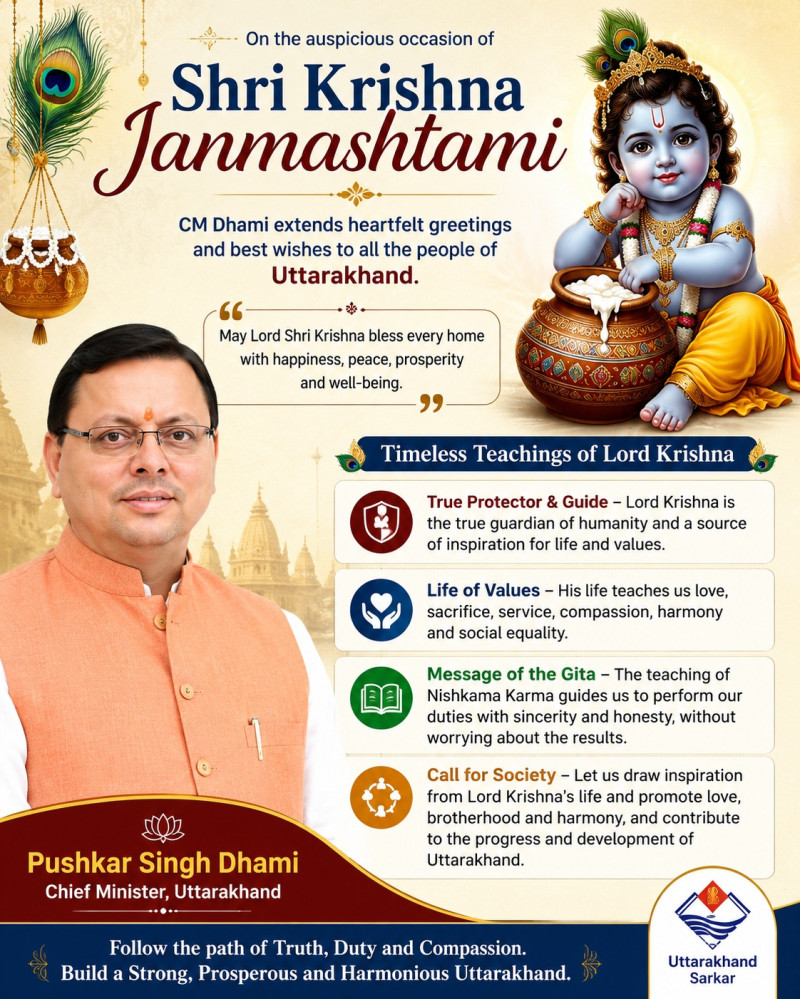
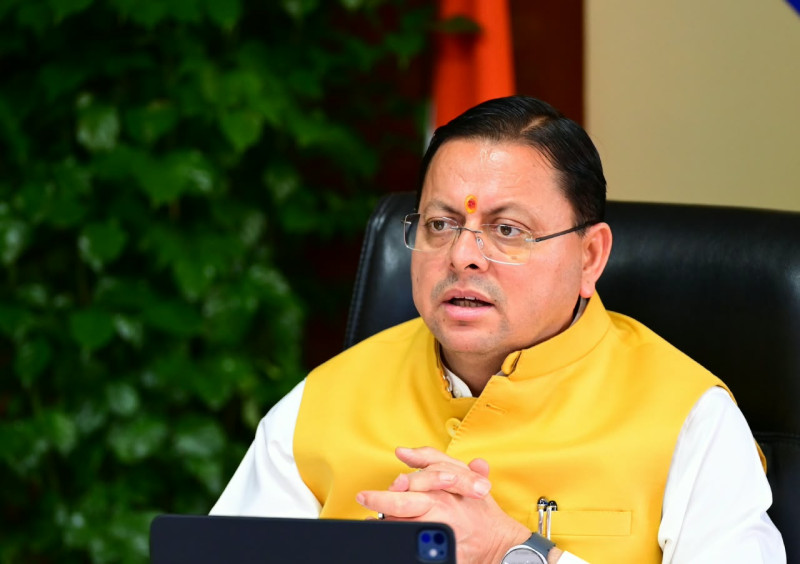
Dehradun: As Uttarakhand prepares to celebrate Shri Krishna Janmashtami, Chief Minister Pushkar Singh Dhami has extended his greetings to the people of the state, invoking Lord Krishna’s timeless teachings of truth, justice, compassion and selfless action.
In his message on the eve of the festival, Dhami described Lord Krishna as a true protector and guide of humanity and a profound source of life philosophy, whose journey continues to offer moral and spiritual direction across generations.
A festival rooted in a timeless philosophy
Janmashtami is not merely a celebration of Krishna’s birth. For millions of devotees, it is an occasion to revisit the values associated with his life and teachings. From his childhood stories in Gokul and Vrindavan to his role as a guide to Arjuna on the battlefield of Kurukshetra, Krishna’s narrative brings together devotion, courage, wisdom, duty and compassion.
Dhami said Krishna’s complete life inspires people to follow the path of truth and justice. His teachings, he noted, encourage individuals to embrace love, sacrifice, service, compassion, harmony and social solidarity—values that remain relevant in contemporary society.
The Chief Minister particularly highlighted Krishna’s sensitivity towards the deprived and neglected sections of society, saying his life carries an enduring message of concern for those who remain vulnerable or marginalised.
The Gita and the art of selfless action
At the heart of Krishna’s philosophy lies the Shrimad Bhagavad Gita, whose message of Nishkama Karma—selfless action without attachment to the fruits of one’s efforts—continues to resonate beyond its historical and religious setting.
Dhami said Krishna showed humanity the importance of performing one’s duties with dedication, sincerity and honesty, without allowing anxiety over the outcome to overshadow the responsibility of action.
The teaching acquires particular significance in an age marked by constant pressure, competition and uncertainty. The Gita’s emphasis on duty and equanimity offers a framework for maintaining balance while remaining committed to one’s responsibilities.
According to the Chief Minister, the Gita’s teachings on devotion, knowledge, yoga and karma can provide positivity, confidence and balance in everyday life.
From devotion to social harmony
The cultural significance of Janmashtami extends beyond temples and religious ceremonies. Krishna’s life and teachings have shaped India’s artistic and cultural traditions through music, dance, theatre, painting, poetry and devotional literature.
Across generations, stories of Krishna have been retold in diverse regional traditions, allowing the festival to become both a religious celebration and an expression of India’s rich cultural heritage.
In Uttarakhand too, Janmashtami becomes an opportunity for communities to come together in an atmosphere of devotion and celebration. The festival’s emphasis on love, brotherhood and harmony gives it a wider social meaning, particularly in a diverse society where festivals often create shared cultural spaces.
Dhami called upon the people of Uttarakhand to draw inspiration from Krishna’s life and promote love, brotherhood and social harmony, while contributing to the development of the state.
A message beyond the festival
The enduring appeal of Krishna lies in the fact that his teachings address not only spiritual questions but also the dilemmas of everyday human life—how to act in difficult circumstances, how to remain committed to duty, how to balance emotion with wisdom and how to work for a larger good.
For Dhami, these values have contemporary relevance. His Janmashtami message connects the festival’s spiritual traditions with a broader call for responsible citizenship and collective participation in Uttarakhand’s progress.
As homes and temples prepare to mark Krishna’s birth with prayers, devotional music and festive rituals, the occasion also offers an opportunity to look beyond celebration and reflect on the values associated with Krishna’s life.
Janmashtami, in this sense, becomes not simply a commemoration of a divine birth, but a cultural reminder of the enduring power of truth, duty, compassion and harmony. For Uttarakhand, the Chief Minister’s message places these timeless ideals at the centre of a contemporary appeal: that personal values and social solidarity should move together with the state’s journey towards development.