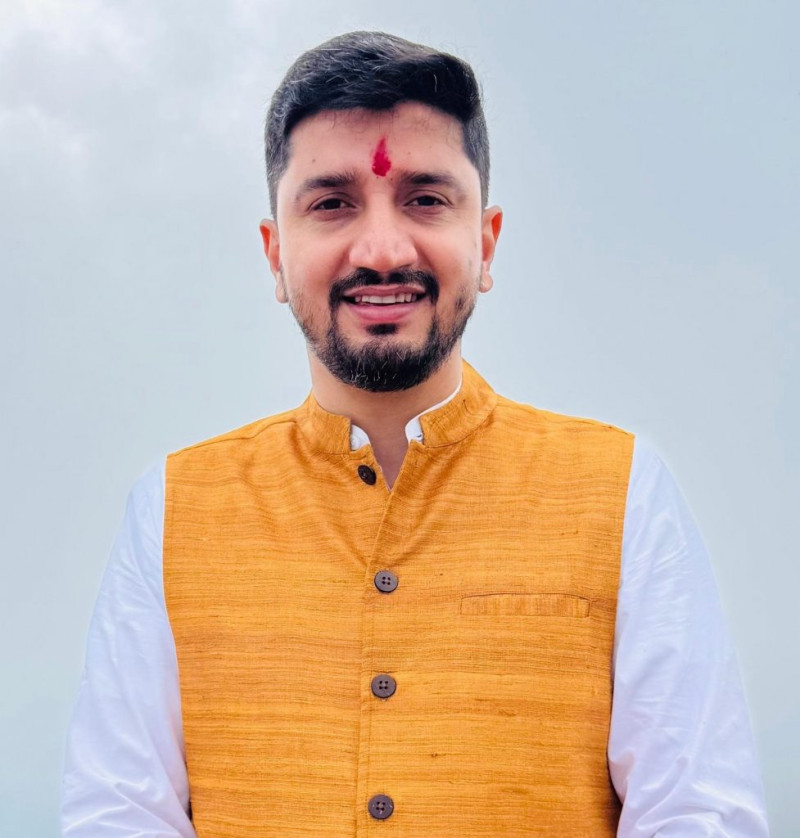

 Dr. Shikha Mishra
Dr Shikhha Mishra
Editor, Lead Reporting (English Weekly)
Ph.D. & M.Phil. in Journalism and Mass Communication
Editorial experiences with—The Indian Express, The Pioneer & Hindustan Times
A seasoned journalist, senior media educator, Media & Communication Researcher
Author and Patent Holder
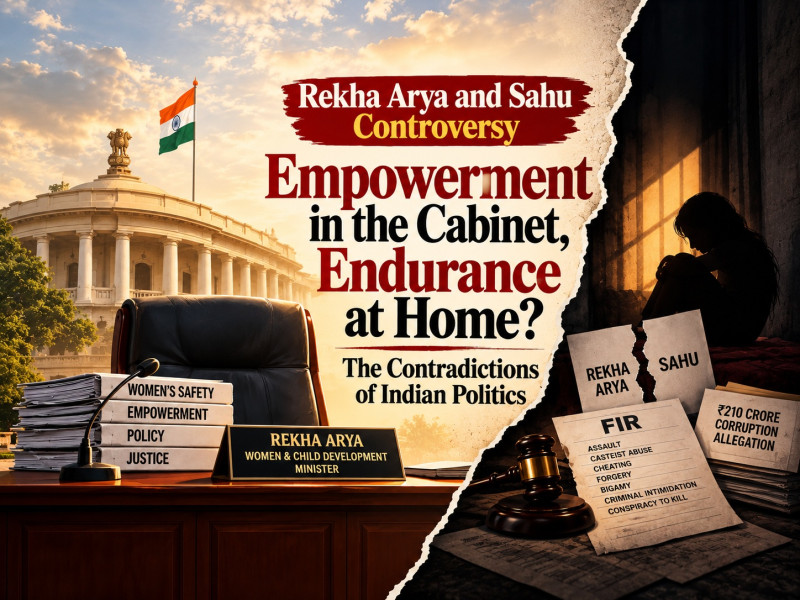
Uttarakhand minister Rekha Arya’s FIR against her husband, Girdhari Lal Sahu, is not merely a domestic dispute that has acquired political colour. It forces an uncomfortable question: in Indian public life, has endurance been treated as the only respectable way out for an empowered woman?
Arya, the state’s Women and Child Development Minister, has accused Sahu of physical assault, casteist abuse, cheating, forgery, bigamy, criminal intimidation and conspiring to kill her. The police registered an FIR after her complaint. Sahu has responded by accusing her of amassing illegal assets worth Rs 210 crore and demanding a probe. The allegations and counter-allegations remain unproven, but the political and institutional questions are already urgent.
Domestic Allegation, Political Stakes
The first conflict of interest is obvious: Arya holds the portfolio most closely associated with women’s protection, while she is herself the complainant in a case involving grave allegations of domestic violence. This does not disqualify her from office, nor should an accusation against her husband be treated as proof of guilt. But it does create a perception problem.
A minister responsible for women’s welfare cannot be seen to enjoy ordinary discretion in a case in which she is personally involved. The investigation must therefore be visibly independent—handled at a senior level, documented carefully, and insulated from any suspicion that party loyalty, ministerial rank or local influence will shape its course.
The same applies to Sahu’s counter-charge. If he genuinely believes there is a corruption case against his wife, he is entitled to approach the appropriate authorities. But a corruption allegation made immediately after a domestic-violence FIR risks becoming a retaliatory instrument rather than a genuine public-interest complaint. The distinction matters: a citizen’s right to complain must be protected, but the timing and motive of political accusations must also be scrutinised.
Rekha Arya’s Endurance or the Empowerment Charade
Indian politics has long romanticised endurance—especially women’s endurance. Women leaders are expected to absorb humiliation, manage difficult marriages, protect family reputation and continue performing public duties without allowing private pain to disrupt the political machine.
Rekha Arya’s decision to go public challenges that expectation. She said she spoke out to encourage women facing domestic violence to come forward. That is significant. A woman minister could have chosen silence, separation without publicity, or a quiet legal route. Instead, she placed her personal crisis inside the public arena.
Yet this choice also exposes the limits of empowerment in politics. An empowered woman may have money, office, security and a platform. She may still find that marriage, family honour, party calculations and public judgment combine to make silence seem safer than speech. The question is not whether Arya is brave; it is why bravery should be required at all.
A Domesticated Political Pattern
Very often it is seen that political couples remain together as long as their mutual interests are served, but split when the bargain stops working. Arya’s case is not without precedent. Here are some cases that fall into the almost same category.
|
Case |
Politician involved |
Allegation / development |
Status / key point |
|
Congress MLA’s wife’s complaint, Dhar, Madhya Pradesh, 2022 |
A former Congress minister and sitting MLA from Dhar |
His wife filed an FIR alleging rape, unnatural sex, repeated domestic abuse and death threats. |
The MLA called it a political conspiracy and said he would contest it in court; this is among the closest precedents to the Arya case because the accusation came from the spouse. |
|
Kirtikumar “Bunty” Bhangdiya case, Maharashtra, 2023 |
BJP MLA from Chimur, Chandrapur |
A woman accused the MLA and his supporters of molestation and assault; police registered a case under IPC Section 354 among others. |
The MLA filed a counter-complaint against the woman’s husband, showing how such cases often produce parallel allegations. |
|
Amita Bagri vs local MLA and police, Panna, Madhya Pradesh, 2026 |
Amita Bagri, BJP leader; her husband Amit Jain was arrested |
After her husband’s arrest, Bagri publicly accused the local police, administration and BJP MLA Rajesh Verma of using political influence against her family. |
This is comparable in the sense that a politician’s spouse became the focal point of a criminal-political dispute, though the allegation here was political victimisation rather than domestic violence. |
Glass Houses, Political Stones: Sahu’s Past Under Scrutiny
Reports have revived past allegations linking Sahu to the 1990 Bareilly double-murder case and subsequent fraud-related matters; these reports do not establish guilt. Criminal liability rests with courts, not headlines. Yet political accountability demands scrutiny: any alleged protection, influence or privileged access must be examined, while politically motivated vilification must equally be ruled out through evidence. The BJP cannot dismiss this as a private embarrassment. Selective outrage—condemning allegations against opponents while shielding those within one’s ranks—erodes public trust. The law must proceed independently, without political interference or convenient silence.
When Accountability Must Bite
Three steps are essential. First, the FIR must be investigated independently, without ministerial interference, witness pressure or deliberate delay. Second, the corruption allegations against Sahu must be assessed on evidence, neither dismissed nor weaponised. Third, political parties need clear protocols requiring disclosure, recusal from related decisions and cooperation with investigations when serious allegations arise. Public office is a public trust; allegations involving violence cannot be shielded as private matters, nor can they be treated as proof of guilt.
Beyond Endurance
The deeper issue is a culture that expects women to endure first and seek justice later. A woman alleging abuse is asked whether she is damaging her family or party; the accused must answer for his alleged conduct. Arya’s case is neither a marital morality play nor a partisan weapon, but a serious complaint demanding impartial investigation and scrutiny. Women’s empowerment means more than a cabinet seat; it means the freedom to say “no more” without being told to adjust, tolerate and remain silent. Justice must replace endurance.