
 Dr. Shikha Mishra
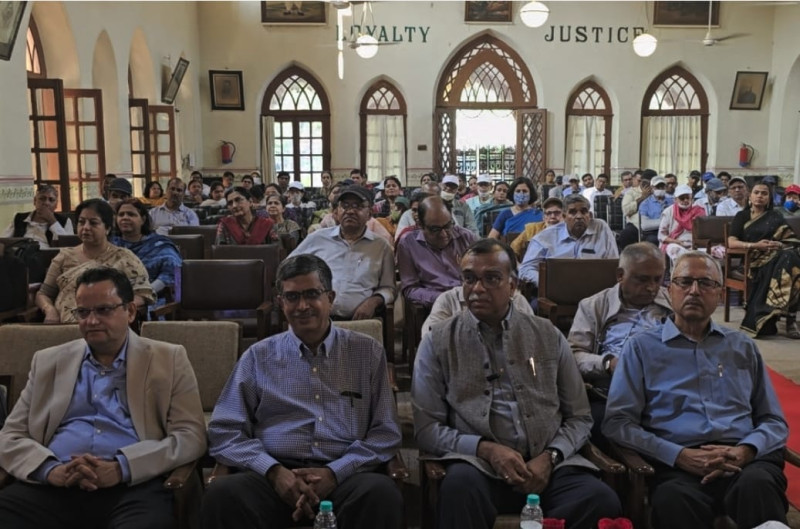
Prof. Umesh V. Waghmare, Secretary, Department of Science and Technology, calls for stronger research capabilities, interdisciplinary collaboration and innovation to advance India’s vision of Viksit Bharat 2047
Agra, October 31, 2026: Dayalbagh Educational Institute (DEI), a Deemed-to-be University, organised its Diamond Jubilee Memorial Lecture on Saturday, featuring eminent scientist and academician Prof. Umesh V. Waghmare, Secretary, Department of Science and Technology, Ministry of Science and Technology, Government of India. Speaking on the theme “Shaping Science and Technology Ecosystem of India”, Prof. Waghmare highlighted the importance of scientific research, technological innovation and interdisciplinary collaboration in building a globally competitive and self-reliant India.
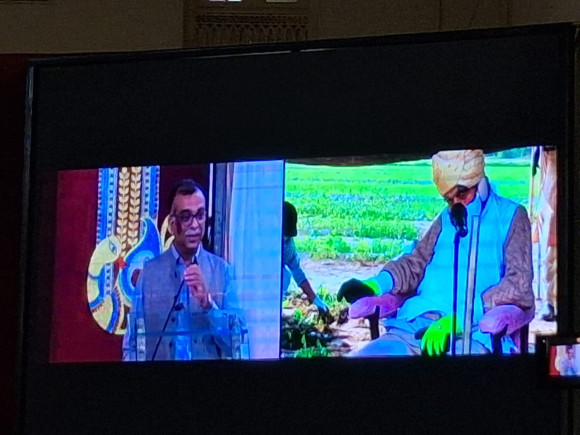
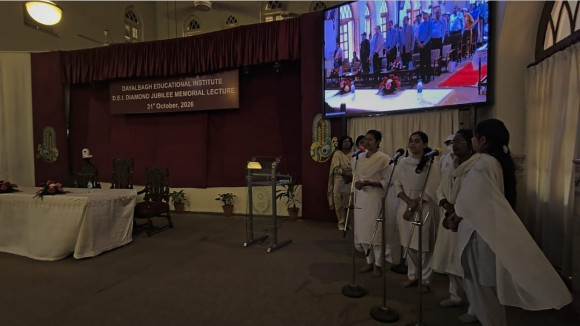
Held at 2.30 pm at the DEI Convocation Hall (Shiksha Srot Bhavan), the lecture brought together members of the academic community and distinguished guests for a discussion on the country's evolving scientific and technological landscape.
Prof. Sanjeev Swami, Registrar, DEI, opened the proceedings by explaining the historical significance of the Diamond Jubilee Memorial Lectures and tracing the institution's educational journey. He recalled that the Radhasoami Satsang Sabha established the Radhasoami Educational Institute (REI) as a co-educational middle school on January 1, 1917, marking the beginning of formal education in Dayalbagh.
The institution was founded on the ideals of the Radhasoami Faith, with an emphasis on nurturing future generations through value-based education and extending affordable, quality learning opportunities to wider sections of society, particularly the underprivileged. A new phase of institutional development began in 1973 under the guidance of its Founder Director, Param Guru Dr. M.B. Lal Sahab, when the educational institutions of Dayalbagh were brought under the umbrella of the Dayalbagh Educational Institute. The Diamond Jubilee of REI was celebrated in 1977, commemorating 60 years of its educational journey.
Prof. C. Patvardhan, Director, DEI, introduced the guest speaker and outlined his distinguished academic and research career. An eminent physicist, Prof. Waghmare earned his B.Tech. in Engineering Physics from IIT Bombay in 1990, receiving the Institute Silver Medal, and completed his Ph.D. in Applied Physics at Yale University in 1996. He subsequently undertook postdoctoral research at Harvard University before joining the Jawaharlal Nehru Centre for Advanced Scientific Research (JNCASR), Bengaluru, in 2000. He served as Professor in its Theoretical Sciences Unit and as President during 2025–26.
His research contributions span computational materials science, ab initio modelling, multifunctional materials, nanostructures, quantum geometry, topological insulators, and materials for energy and environmental applications. He has also served as President of the Indian Academy of Sciences from 2022 to 2024. His major honours include the Shanti Swarup Bhatnagar Prize (2010), Infosys Prize in Engineering and Computer Science (2015), and G.D. Birla Award for Scientific Research (2016). He assumed charge as Secretary, Department of Science and Technology, in July 2026.
In his lecture, Prof. Waghmare examined how advances in materials science, quantum technologies, artificial intelligence, robotics and cyber-physical systems could shape India's scientific and technological future. He stressed the need to strengthen indigenous research capabilities and ensure that scientific discoveries translate into practical technologies with tangible societal benefits.
He called for stronger collaboration among universities, research institutions, industries, start-ups and government agencies to bridge the gap between fundamental research and its real-world applications. Such partnerships, he emphasised, are essential to nurturing innovation, encouraging technology entrepreneurship and building an integrated research ecosystem.
Linking India's scientific ambitions with the national vision of Viksit Bharat 2047, Prof. Waghmare underscored the importance of institutional excellence, advanced research infrastructure, strategic national missions and a globally competitive innovation environment. He also highlighted the need to ensure that technological progress remains inclusive, sustainable and responsive to the needs of society.
Reflecting on the role of higher education institutions, he observed that universities such as DEI have an important responsibility in nurturing scientific temper, encouraging interdisciplinary research and preparing future-ready human resources. He also emphasised that scientific excellence must be complemented by ethical values and social responsibility.
Prof. Waghmare commended DEI for its efforts to integrate scientific advancement with value-based education and contribute to India's aspirations for technological self-reliance and global leadership.
Most Revered Prof. Prem Saran Satsangi Sahab, Chairman of the Advisory Committee on Education, and Most Respected Rani Sahiba Ji graced the occasion with their esteemed presence.
The programme concluded with a vote of thanks. The Diamond Jubilee Memorial Lecture provided an engaging platform for reflection on India's scientific priorities and the role of educational institutions in shaping the country's research, innovation and technological capabilities.