
 Dr. Shikha Mishra
Selja’s Visit Signals Strategy, Strain, and Stakes
By Dr Shikhha Mishra
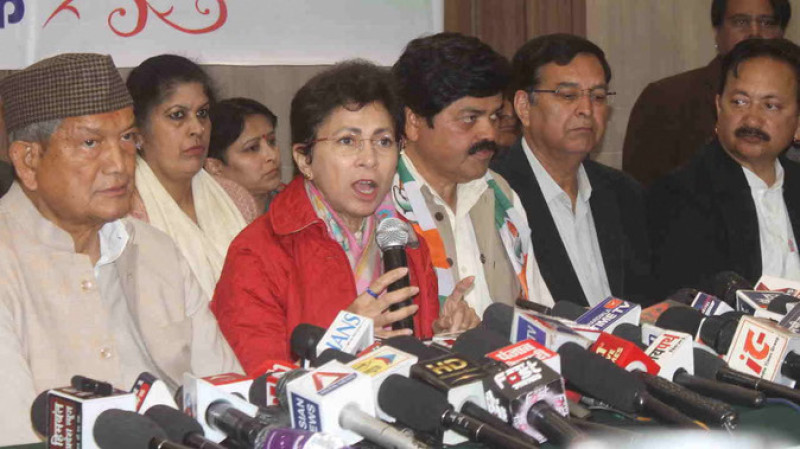
Dehradun: With an eye firmly on the 2027 Assembly elections, the Congress in Uttarakhand has initiated an early political reset, led by state in-charge Kumari Selja’s five-day tour from April 8 to 12. The visit, spanning key regions from Rudrapur to the Garhwal hills, was not merely organisational—it marked a calculated attempt to rebuild the party’s fractured base while crafting a credible comeback strategy.
At its core, Selja’s outreach revolved around three strategic pillars: grassroots revival, faction management, and narrative control. Party workers were directed to immediately begin membership drives, signalling a shift from reactive opposition to proactive mobilisation. The emphasis was clear—Congress aims to rebuild its organisational depth well ahead of the electoral cycle.
However, the most pressing challenge lay in managing internal dissent. The tour came against the backdrop of a deepening factional crisis triggered by former Chief Minister Harish Rawat’s “15-day political break,” which exposed simmering tensions within the party. Selja’s back-to-back meetings with rival factions—including camps aligned with Harish Rawat and Harak Singh Rawat—were aimed at preventing a repeat of the damaging 2016 rebellion.
The intervention appears to have yielded partial success. A high-command mediated truce, symbolised by Leader of Opposition Yashpal Arya’s outreach and Rawat’s return from his political hiatus, has temporarily stabilised the party. Yet, the message from the central leadership is unambiguous: while Rawat remains the face of the campaign, organisational decisions will not be dictated by any single leader.
Parallel to internal consolidation, Selja sharpened the party’s political messaging. By projecting the BJP government as centralised and disconnected, Congress is attempting to localise anti-incumbency sentiments. The timing is strategic, particularly in light of recent defections from the BJP, including several former MLAs who have raised concerns over governance and leadership style.
Interestingly, Congress’s controversial “One Family, One Ticket” policy could become both a risk and an opportunity. While it may alienate entrenched political families within the party, it simultaneously opens up 15-20 constituencies for new entrants—potentially including disgruntled BJP leaders. This dual strategy aims to expand the party’s electoral bench while projecting a reformist image.
Political observers note that Congress’s roadmap to 2027 hinges on a delicate balancing act. The party must maintain unity among competing factions, attract credible defectors, and rebuild its grassroots network without triggering fresh dissent. In contrast, the BJP remains confident, banking on welfare delivery, strong leadership, and ideological consolidation to retain power.
The coming months will test whether Selja’s intervention marks a genuine turnaround or merely a temporary truce. Much will depend on Harish Rawat’s willingness to lead a unified campaign and the party’s ability to convert internal adjustments into electoral momentum.
For now, the Congress reset has begun—but its success will depend on whether strategy can overcome structural fault lines in Uttarakhand’s complex political landscape.