
 Dr. Shikha Mishra
Book Review Highlights: ‘Sanjay Uvach’ Emerges as a Powerful Intellectual Journey Through India’s Media, Culture and Democratic Thought
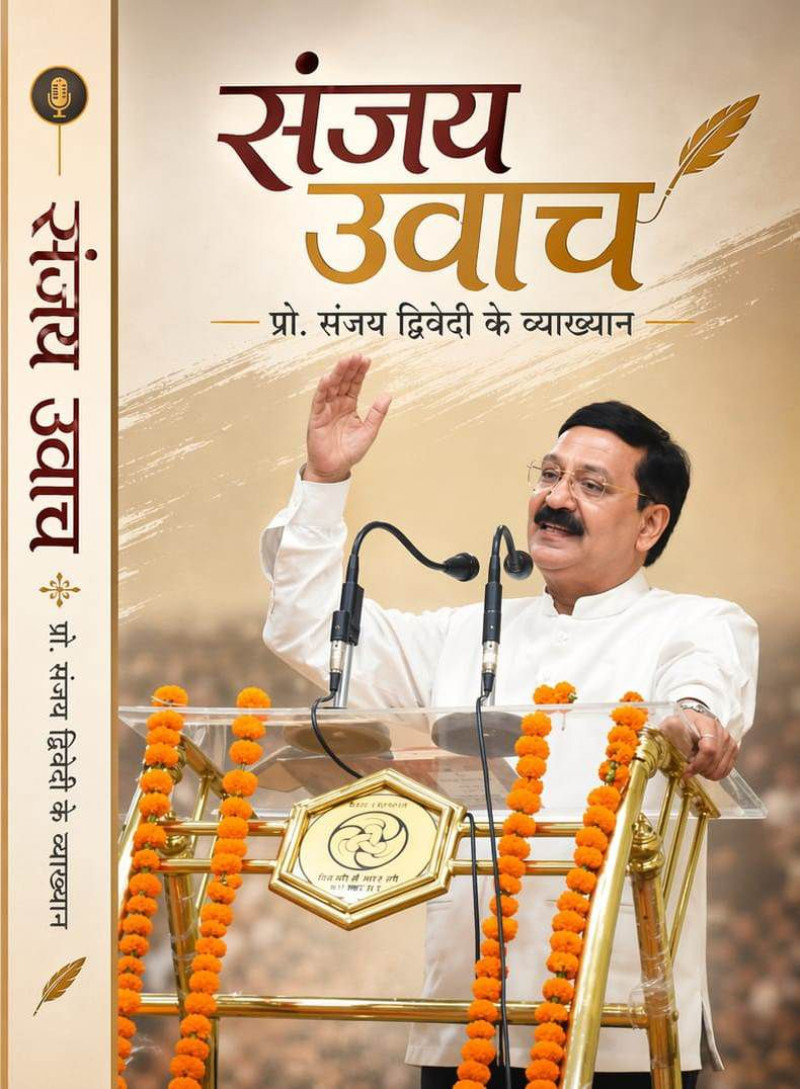
Sagar: Renowned academic and media scholar Prof. Sanjay Dwivedi’s latest lecture compilation, Sanjay Uvach, has been hailed as a significant contribution to contemporary Indian intellectual discourse. In a detailed review, Dr. Rajneesh Agrahari described the book as a “living narrative of ideological renaissance” that explores journalism, culture, language, education, democracy and Indian civilizational thought through a uniquely Indian lens.
Published by Shilpayan Publishers and Distributors, the 370-page volume comprises 45 chapters and presents a comprehensive reflection on the challenges and possibilities facing modern India. According to the reviewer, the book is not merely a collection of lectures but an intellectual map of the tensions, aspirations and debates shaping Indian society and media today.
Former Chhattisgarh Chief Minister Dr. Raman Singh, in the foreword, observes that reading Sanjay Uvach is akin to embarking on a “journey through the ideas of India.” The book’s central theme revolves around the transformative power of dialogue, which Prof. Dwivedi regards as the lifeblood of civilization and the foundation of democratic coexistence.
A major strength of the book lies in its critical examination of contemporary journalism. At a time when media faces challenges posed by commercialization, ideological polarization and information overload, the author calls for reconnecting journalism with social responsibility and public welfare. Chapters such as Returning Media to Its Roots advocate a people-centric approach rooted in compassion, cultural values and nation-building.
The book also offers an insightful critique of India’s media education system, questioning the continued dominance of colonial frameworks and the marginalization of Indian languages and experiences. Prof. Dwivedi argues for innovation, media literacy, re-skilling and intellectual self-reliance in the digital age, particularly in combating fake news and information disorder.
Language and cultural identity form another important pillar of the work. While emphasizing Hindi’s role as a natural link language, the author advocates equal respect for all Indian languages. He presents language as a carrier of cultural memory, national identity and India’s soft power, particularly through cinema and popular culture.
The review highlights the book’s balanced treatment of social harmony and national identity through discussions on personalities such as Dr. B.R. Ambedkar, Netaji Subhas Chandra Bose, Pandit Deendayal Upadhyaya and Tulsidas. Essays addressing themes of shared heritage, cultural continuity and coexistence reflect the author’s vision of India as a living civilization rather than merely a political nation-state.
The book also examines governance, the National Education Policy and the concept of Atmanirbhar Bharat, advocating an education system that promotes creativity, critical thinking and India’s knowledge traditions alongside technological advancement.
Dr. Agrahari praises Prof. Dwivedi’s writing style for blending the factual precision of a journalist, the clarity of a teacher and the depth of a thinker. He concludes that Sanjay Uvach serves as an important intellectual document that reasserts the relevance of dialogue, truth, sensitivity and social responsibility in an era of cultural and ideological challenges.
The reviewer recommends the book not only to students of media and communication but also to readers seeking a deeper understanding of India, democracy, language, culture and contemporary public discourse.