
 Dr. Shikha Mishra
By Dr Pankaj Soni
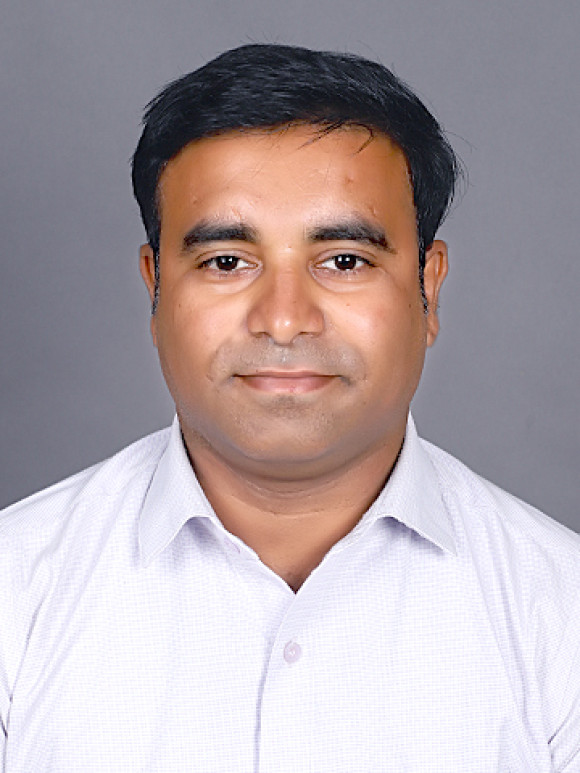
Reviewer and Assistant Professor, Department of Journalism and Mass Communication, IIMT University, Meerut
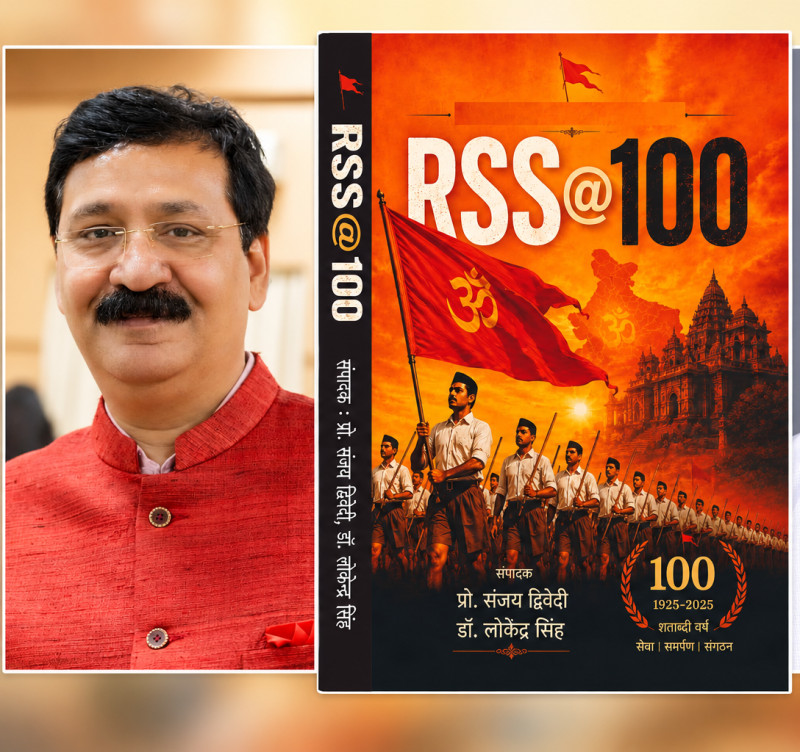
The year 2026 represents more than a milestone in the centenary celebrations of the Rashtriya Swayamsevak Sangh (RSS); it marks an important moment to reflect on the organisation’s journey, assess its present role and examine its vision for the century ahead. Founded in 1925, the RSS completed 100 years in 2025 and has now embarked on its second century. Against this historic backdrop, two distinguished scholars of journalism, Prof. Sanjay Dwivedi and Dr Lokendra Singh, have edited RSS@100, a book that seeks to examine the organisation’s hundred-year journey, ideological foundations, contemporary relevance and possible future direction.
The volume brings together historical reflection, ideological perspectives and contemporary analysis, attempting to connect the organisation’s past, present and future within a single framework.
Edited by Prof. Sanjay Dwivedi and Dr Lokendra Singh, the book comprises 35 articles contributed by an extensive group of writers and public figures. Contributors include RSS Sarsanghchalak Dr Mohan Bhagwat, Prime Minister Narendra Modi, former President Ram Nath Kovind, Sarkaryavah Dattatreya Hosabale, Defence Minister Rajnath Singh, Madhya Pradesh Chief Minister Dr Mohan Yadav, Dr Sadanand Damodar Sapre, Kailash Chandra, Hitanand Sharma, Dharmendra Singh Lodhi, Dr Shahid Ali, Pramod Bhargava, Nitin Garge, Dr Shivani Katara, Dr Saurabh Malviya, Girish Joshi, Prof. Pawan Singh and Sudarshan Vyas, among others. The inclusion of historical writings and reflections by eminent personalities further broadens the scope of the publication.
Together, these contributions present different perspectives on the RSS and its evolution. Rajnath Singh describes the organisation’s journey as one of service, sacrifice and nation-building. Dr Mohan Yadav characterises its hundred years as a saga of organisational dedication, selfless service, commitment and perseverance. Kailash Chandra, meanwhile, views it as a journey from the making of individuals to the building of the nation.
From Mohite's Wada to a Nationwide and Global Presence
Dr Lokendra Singh’s contribution brings the organisation’s formative years into focus. The RSS began its first shakha at Mohite's Wada in Nagpur, while its name was formally adopted by collective agreement at a meeting held on April 17, 1926.
The author divides the organisation’s hundred-year journey into four broad phases: organisational consolidation, expansion of activities, acceleration of service initiatives, and engagement with constructive forces in society. This framework makes a complex institutional history easier to follow.
The article also uses organisational figures to illustrate the RSS’s geographical reach, stating that shakhas operate in approximately 98 per cent of the country's districts and that the organisation conducts 83,129 daily shakhas. These figures, as presented in the book, offer an indication of the scale of its organisational expansion.
Dr Mohan Bhagwat’s contribution provides an insight into the organisation’s ideological outlook through the words of its highest leadership. Explaining the cultural significance of the term ‘Hindu’, he connects it with the civilisational idea of Vasudhaiva Kutumbakam—the world as one family.
He identifies three fundamental positions on which the RSS remains steadfast: transformation through individual development, social change emerging from an organised society, and the conception of Hindustan as a Hindu Rashtra. On other matters, he suggests, the organisation remains flexible. Looking ahead, he emphasises the importance of bringing together constructive social forces and maintaining sustained dialogue with opinion-makers across society.
Addressing Misconceptions: A Space Where Questions Are Welcome
One of the book’s notable features is its willingness to engage with questions and misconceptions surrounding the RSS. In his editorial, Prof. Sanjay Dwivedi argues that the maturity of an organisation can be judged by whether it avoids difficult questions or addresses them directly.
The strength of RSS@100, he suggests, lies in its attempt to place challenging questions at the centre of discussion rather than sidestepping them. His editorial, titled Dil Se Samajhiye RSS Ko (Understand the RSS from the Heart), sets the tone for this approach. It argues that the organisation has traditionally concentrated on its work rather than publicity, and that its reluctance to engage in public rebuttals has sometimes allowed misconceptions to persist. The book seeks to bridge this communication gap by encouraging dialogue.
Dr Sadanand Damodar Sapre takes this discussion further in his article, Kuch Bhrantiyan Evam Vastusthiti (Some Misconceptions and the Reality). He makes an interesting observation that even among the RSS’s supporters, a recurring sentiment often exists: “The Sangh is good, but…” According to him, the questions that follow this qualification deserve clear and reasoned answers.
The author addresses several frequently raised questions, including the meaning of the word ‘Hindu’. He argues that the RSS uses the term in a cultural and civilisational sense rather than as a reference to a particular mode of worship. To illustrate the distinction between national identity and religious affiliation, he cites examples such as Turkistan, Afghanistan and Uzbekistan. He also refers to the use of the word ‘Hindi’ as a marker of national identity in the celebrated poem Sare Jahan Se Achha Hindostan Hamara.
Discussing the RSS tradition of Ekatmata Stotra, Sapre refers to personalities from diverse religious and philosophical traditions, including Dadabhai Naoroji, a Parsi; poet Raskhan, a Muslim; Guru Nanak; Lord Mahavira; and Gautama Buddha. He presents these references as evidence of the organisation’s practice of remembering distinguished figures from different traditions.
On allegations concerning caste discrimination, the author maintains that the organisation is guided by a spirit of contribution and service rather than personal gain. He argues that people from every caste can participate in the organisation’s activities and serve the nation.
The article also highlights the importance of dialogue across ideological differences. Sapre cites former President Pranab Mukherjee, scientist Dr Kasturirangan and Nobel laureate Kailash Satyarthi as examples of eminent personalities associated with interactions and engagements involving the RSS. His concluding appeal is that those who have questions about the organisation should observe its functioning closely, understand its activities and arrive at their own conclusions.
Cultural Nationalism and the Importance of Dialogue
Dr Shahid Ali’s article, Sangh Ka Rashtravad Aur Hum (The Sangh’s Nationalism and Us), extends the discussion to the RSS perspective on nationalism. He describes its approach as cultural nationalism and characterises the RSS as a cultural organisation that has completed a century of continuous activity.
Ali also discusses Dr Mohan Bhagwat’s emphasis on national harmony and dialogue, including interactions associated with the Muslim Rashtriya Manch. He views such initiatives as relevant to the broader objective of strengthening social understanding and engagement.
The book also addresses practical questions that frequently arise in discussions about the RSS, covering its shakhas, uniform, membership structure, the role of women and the network of organisations associated with it. It refers to the establishment of the Rashtra Sevika Samiti in 1936 while discussing women's participation in organised social activities.
This explanatory approach helps distinguish RSS@100 from a conventional commemorative volume. Rather than limiting itself to a celebration of the centenary, it attempts to provide readers with information and perspectives on the organisation's structure, ideology and activities.
Why Should Readers Explore This Book?
The book offers several features that make it useful for readers interested in understanding the RSS:
- A structured account of the organisation: It covers the RSS’s origins, education initiatives, service activities, women’s participation, youth engagement, cow protection, environmental concerns, Panch Parivartan, Hindutva, nationalism and social media.
- Direct engagement with misconceptions: Articles such as Kuch Bhrantiyan Evam Vastusthiti, along with a dedicated frequently asked questions section, address commonly raised questions rather than avoiding them.
- A useful historical reference: The section on significant events in the organisation’s hundred-year journey, covering the period from 1925 to 2016, provides a chronological reference for students and researchers.
- An accessible introduction for new readers: Basic questions about shakhas, uniforms, membership and women's participation are addressed in straightforward language, making the book approachable for readers unfamiliar with the organisation.
- A case study for media students: The chapter on social media offers an opportunity to examine the relationship between an organisation’s traditional methods of communication and its engagement with digital platforms.
- Concise and independent articles: The individual contributions can be read independently, allowing readers to approach the book according to their interests without having to follow a rigid sequence.
A Centenary Volume and a Window to the Future
Overall, RSS@100 is a comprehensive and reflective account of the RSS’s hundred-year journey, bringing together historical narratives, ideological interpretations and contemporary perspectives. Its particular value lies in the attempt to place the organisation’s achievements, ideas, questions and future challenges within a wider framework of discussion.
For readers, researchers and students of journalism, politics and social affairs, the book offers an opportunity to explore the RSS through multiple contributions and viewpoints. As the organisation enters its second century, the volume serves as a useful window into its history, its understanding of the present and the direction it seeks to pursue in the years ahead.
Book: RSS@100
Editors: Prof. Sanjay Dwivedi and Dr Lokendra Singh
Publisher: Shilpayan Publishers and Distributors, New Delhi
Price: ₹450