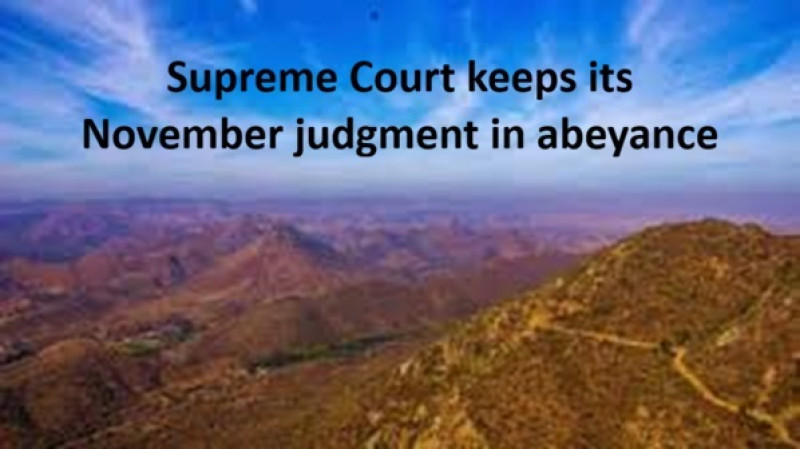
New Delhi, Dec 29 — In a significant development, the Supreme Court has stayed its own November 19 order concerning the Aravalli mountain range, citing ambiguity and misinterpretation of its earlier remarks. The Court emphasized the need for a neutral and comprehensive report before implementing its November 20 directive.
Chief Justice of India D.Y. Chandrachud, presiding over the vacation bench, expressed concern over the misrepresentation of the Court’s observations and stressed the importance of resolving definitional uncertainties—particularly regarding the 50-meter buffer zone around the Aravalli hills.
Concerns Over Ecological Impact
The stay comes amid growing criticism from environmentalists and scientists who warned that the Court’s earlier order could open vast ecologically sensitive areas to unregulated mining. The controversy began after the Centre notified a new definition of the Aravalli range, which activists claim was issued without adequate public consultation or scientific evaluation.
Court Calls for Fresh Expert Panel
During Monday’s hearing, the bench stated, “We find it necessary to suspend the recommendations of the committee and the directions of this Court until a new expert panel is constituted.” The Court also issued notices to the Union government and four concerned states, directing them to respond and scheduled the next hearing for January 21.
What Was the November Order?
In November, the Supreme Court had instructed the Centre to formulate a comprehensive sustainable mining plan before permitting any new mining activity in the region. However, Solicitor General Tushar Mehta argued that the Court had already accepted the plan last month.
The CJI refuted this claim, stating that the Court’s comments and the committee’s findings were being misinterpreted. “Clarification is needed,” he said, “and before any implementation, an impartial and independent expert opinion must be considered.”
Definitional Ambiguity at the Core
The Chief Justice further noted that clear guidance is essential to determine whether the new definition has inadvertently expanded the scope of non-Aravalli areas—potentially facilitating continued illegal mining.
Disclaimer: This news is written on the basis of information received from different authentic sources.


 Dr. Shikha Mishra