
 Dr. Shikha Mishra
Haridwar, Jan 07, 2025:
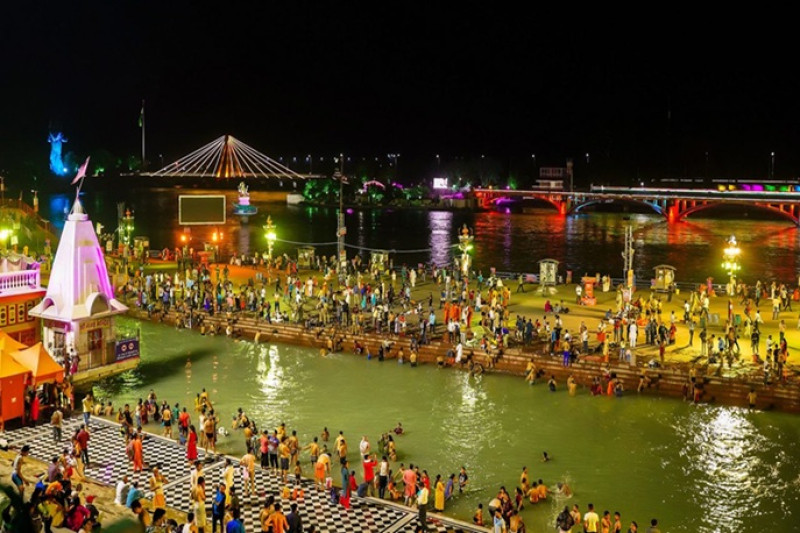
With preparations underway for the 2027 Ardh Kumbh Mela, Hindu organizations in Haridwar have called for the entire Kumbh area to be declared a Hindu‑only zone. The demand, they argue, is necessary to preserve the sanctity of rituals and ensure a secure environment for millions of pilgrims expected to attend.
Leaders of these groups have cited the 1935 Shri Ganga Sabha Act, which imposed restrictions on non‑Hindus—referred to as “Ahindus”—entering Har Ki Pauri, Kushavart Ghat, and other sacred sites. The Act also prohibited meat shops and stalls in the vicinity of the ghats. According to the organizations, the provisions reflected local religious traditions and should be enforced again in the present context.
Representatives expressed concern over what they described as “growing encroachment and religious disputes.” They claimed that incidents such as “love jihad, land jihad and other forms of interference” were increasing, alongside reports of atrocities against Hindus in Bangladesh and alleged infiltration by Rohingya and Bangladeshi nationals.
“Crores of devotees will gather in Haridwar for bathing, meditation and worship. They must find a protected and pure environment for their rituals,” one group leader said, stressing that the demand was aimed at safeguarding Sanatani practices.
The Ardh Kumbh Mela, one of India’s largest religious congregations, is scheduled to take place in Haridwar in 2027. The call to designate the mela zone as a Hindu‑only area is expected to spark debate over tradition, law, and inclusivity as preparations intensify.
Reference to 1935 Ganga Sabha Act in Haridwar Debate
The ongoing debate over restrictions in the Kumbh Mela area has taken a historical turn, with the Shri Ganga Sabha citing provisions from its 1935 Act. The Act, framed during the British era, explicitly prohibited meat shops, stalls, and the sale of meat within the Har Ki Pauri and Kumbh zones. It also barred the entry of non‑Hindus—referred to as “Ahindus”—into these sacred areas.
Nitin Gautam, president of Shri Ganga Sabha, said that nearly a century ago, the Haridwar municipal by‑laws had laid down these restrictions based on local religious traditions and sentiments. “The rules were framed with the involvement of the Ganga Sabha and the wider religious community, ensuring the sanctity of Har Ki Pauri and Kushavart Ghat,” he stated.
Gautam argued that if such measures were deemed necessary a hundred years ago, they are even more relevant today. Pointing to incidents in Bangladesh and alleged disruptions by non‑Hindus in religious spaces, he said the need to safeguard rituals and pilgrimage sites has grown stronger.
“We have benefitted from this arrangement for the past century. The system must now continue for hundreds of years ahead, providing Sanatanis with a secure environment for worship and rituals,” Gautam added.
The remarks come as preparations intensify for the next Kumbh Mela in Haridwar, where millions of devotees are expected to gather. The reference to the 1935 Act has reignited discussions on how traditional by‑laws should be interpreted and enforced in the present day.
Demand Raised to Declare Kumbh Area as Hindu Zone
A fresh demand has been made to declare the entire Kumbh Mela area in Haridwar as a Hindu zone, with restrictions on the entry of non‑Hindus into religious spaces and rituals.
Speaking to the media, Nitin Gautam, president of Shri Ganga Sabha, said that while earlier lakhs of devotees would participate peacefully, recent years have seen “disturbances in religious ceremonies” allegedly caused by outsiders. He argued that to ensure the smooth conduct of the upcoming Kumbh, the mela grounds should be formally designated as a Hindu‑only area.
Gautam cited the example of Prayagraj Kumbh, where he claimed arrangements were made to ensure that millions of Sanatanis could perform their rituals without interference. “When crores of devotees arrive in Haridwar, they must find a protected and safe space for bathing, meditation and worship,” he said, adding that larger protected zones are needed to accommodate the influx.
He further demanded that all ghats and religious sites within the Kumbh area prohibit entry to non‑Hindus, stating that earlier by‑laws had provided safeguards which now need to be strengthened. Gautam said he has repeatedly met Chief Minister Pushkar Singh Dhami to press this demand, praising the CM’s earlier actions against “illegal shrines, madrasas and encroachments.”
According to Gautam, the by‑laws have benefitted Sanatanis for over a century and should continue to do so. He warned that those who “break rules with malicious intent” must face punitive action, stressing that when society stands united, such disruptions can be prevented.
The demand comes ahead of preparations for the next Kumbh Mela in Haridwar, where millions of pilgrims are expected to gather.
Call for Mahakumbh‑Style Arrangements in Haridwar
Local priest Ujjwal Pandya has urged the government to adopt arrangements similar to those seen at the Prayagraj Mahakumbh, insisting that religious activities in Haridwar should be conducted exclusively by Hindu artisans and workers.
Speaking to reporters, Pandya alleged that individuals “unconnected with our religion, culture and traditions” were increasingly encroaching upon the sacred space and disrupting rituals. He demanded that the state government ensure that stalls, yajna shalas, and kathamandaps are managed only by Hindu craftsmen, stressing that “all types of Hindu artisans are available” and that non‑Hindus should not be permitted entry into such work.
Pandya described Haridwar as the “capital of religion” and expressed confidence that the government would heed the voices raised from the holy city. He noted that during colonial times similar concerns had arisen, but now, under what he termed a “government of Hindutva,” such demands would carry greater weight.
Recalling past incidents, Pandya referred to cases where impostors allegedly contaminated food, altered religious symbols, or engaged in superstitious practices. He praised the Chief Minister for ordering the demolition of illegal shrines, which he described as “dangerous” and misleading for devotees.
Pandya concluded by reiterating that the Chief Minister is being recognized as a “protector of religion” and urged the administration to safeguard Haridwar’s sanctity by implementing strict measures akin to those enforced during the Prayagraj Mahakumbh.