
 Dr. Shikha Mishra
“Faith, Freedom and the Limits of Exclusion- No Entry of Hindus in Kumbh Mela”
The proposal to restrict the entry of non-Hindus into Haridwar during the Kumbh Mela revives a perennial tension in Indian public life: where should the line be drawn between safeguarding religious sanctity and upholding constitutional values in a plural society?
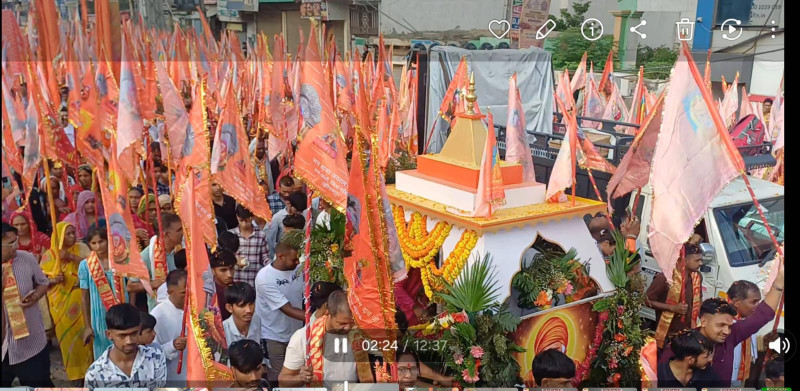
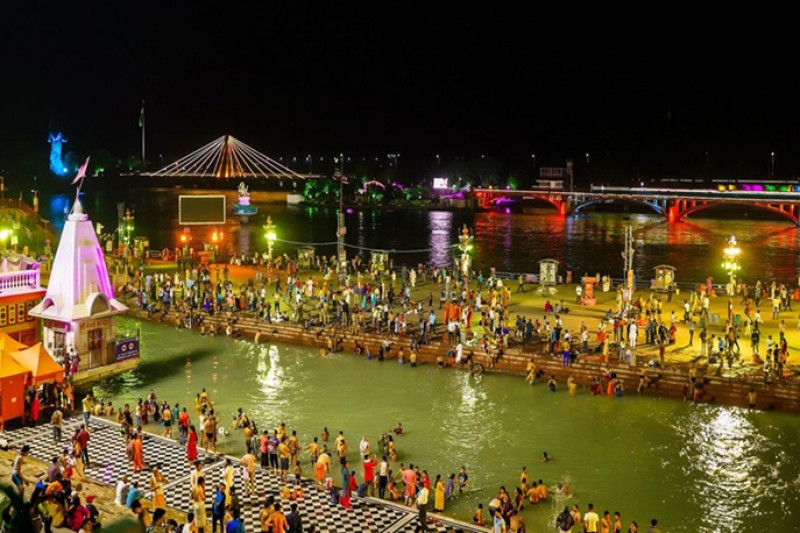
The Kumbh Mela is not merely a festival; it is one of the largest religious congregations in the world, deeply embedded in Hindu belief and ritual practice. For many devotees and religious bodies, the argument for restricting entry is rooted in the desire to preserve the spiritual atmosphere of the event. They contend that the Kumbh is a sacred rite, not a cultural spectacle or tourist fair, and that limiting access could help prevent commercialization, misbehavior, and acts that may offend religious sentiments. From a purely logistical perspective, supporters also argue that restricting entry could reduce overcrowding, ease pressure on civic infrastructure, and improve security management during an event that already strains administrative capacity.
Devotion vs Democracy: The Troubling Logic of Religious Exclusion
There is also a cultural argument advanced by proponents: that certain religious spaces and occasions deserve autonomy, free from external scrutiny or dilution. Similar restrictions exist in specific shrines across religions, both in India and abroad, lending surface legitimacy to the claim that faith-based exclusivity is neither novel nor inherently discriminatory.
Yet, these arguments run up against serious constitutional, ethical, and practical concerns. India’s Constitution guarantees equality before the law and freedom of movement to all citizens, irrespective of religion. A blanket prohibition on non-Hindus entering an entire city—even temporarily—raises troubling questions about collective punishment and religious profiling. Haridwar is not merely a pilgrimage site; it is also a living city with residents, workers, traders, healthcare providers, journalists, and service personnel from diverse religious backgrounds whose livelihoods depend on unrestricted access.
Moreover, enforcement of such a restriction would be fraught with arbitrariness. Determining an individual’s religion is neither administratively feasible nor morally defensible without violating privacy and dignity. Any attempt to do so risk encouraging vigilantism, harassment, and the misuse of authority—outcomes that would undermine the very order and sanctity the restriction claims to protect.
There is also the larger symbolic cost. The Kumbh Mela has long been a marker of India’s civilizational confidence, attracting scholars, photographers, administrators, and observers from across the world. Exclusion based on religious identity may project insecurity rather than strength, and could erode India’s image as a nation capable of accommodating deep faith alongside democratic openness.