
 Dr. Shikha Mishra
Youngistan Has Spoken
“Beat Me, Bash Me, You Can Never Trash Me”
Dr Shikhha Mishra
Editor, Lead Reporting (English Weekly)
Ph.D. & M.Phil. in Journalism and Mass Communication
Editorial experience with—The Indian Express, The Pioneer & Hindustan Times
A seasoned journalist, senior media educator, Media & Communication Researcher
Author and Patent Holder

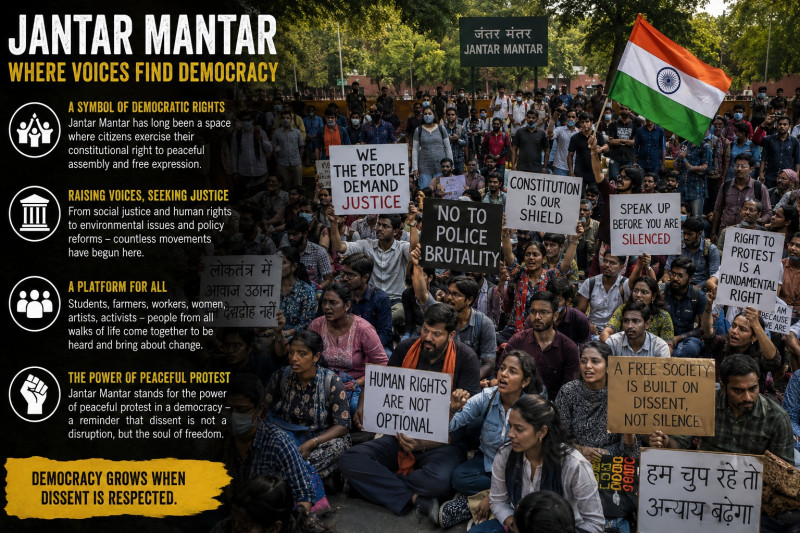
India’s youth has done what governments and opposition parties alike too often fail to do: it has forced the country to listen. The Gen Z protest at Jantar Mantar, built around educational reform and the demand for Dharmendra Pradhan’s resignation, has become more than a campus agitation. It is now a blunt political statement that a young nation cannot be governed by ignoring the young. The message from the street was clear: “Beat me, bash me, you can never trash me.”
That phrase, borrowed from a Michael Jackson song, captures the mood with rare accuracy. It is not merely defiance; it is endurance. It speaks to a generation that has been insulted as indisciplined, distracted and impatient, yet has shown the discipline to organize, the courage to persist and the stamina to stand up to a system that has repeatedly asked it to wait. In a country where education is sold as the ladder to dignity, the anger of students is not a disruption. It is a diagnosis.
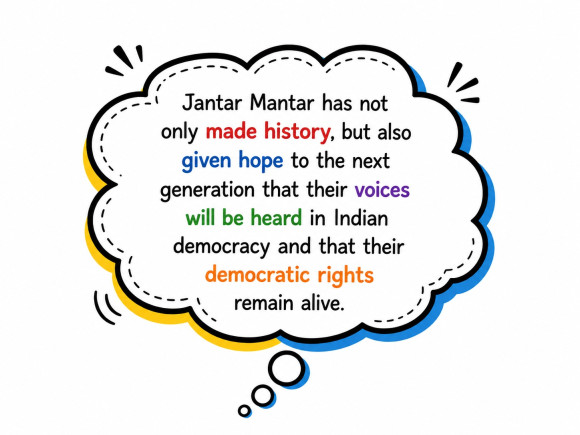
Jantar Mantar has not only made history, but also given hope to the next generation that their voices will be heard in Indian democracy and that their democratic rights remain alive. The long-awaited resignation demand from Education Minister Dharmendra Pradhan by the students protesting against the NEET paper leak have called for urgent education reform, demanding that the minister must take responsibility for a flawed examination system and create a safe, transparent, and credible education structure cannot be ruled out as irrational.
The trigger was not abstract ideology. It was a deep and growing crisis in the education system: exam anxiety, allegations of paper leaks, suicide cases, institutional mistrust and the steady erosion of confidence among aspirants and their families. Reports have varied on the exact numbers, but the fear is not fabricated. When students begin to believe that merit can be mocked by leakage, corruption or political indifference, the social contract is already damaged. What Jantar Mantar exposed was not merely a protest; it was a failure of governance.
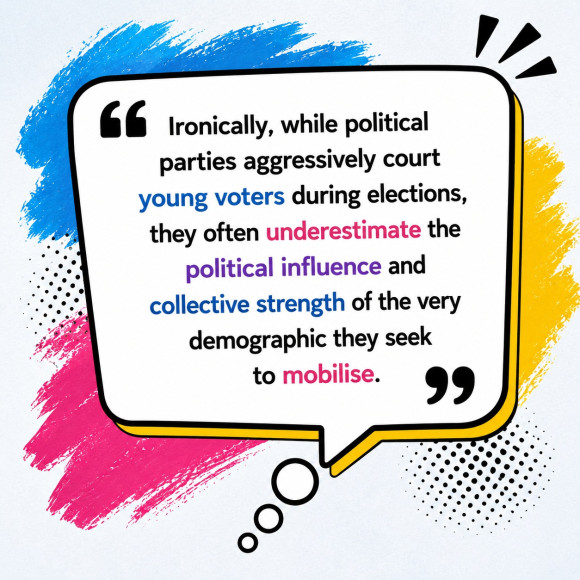
The most important political truth in this moment is that “Youngistan” is no longer a decorative phrase in election speeches. Every party wants the youth as a vote bank, a slogan, a social media force and a symbol of future India. Yet when that same youth speaks in anger, they are often dismissed as noisy, misled or even anti-national. That is a dangerous reflex. You cannot celebrate the energy of the young only when it helps you win power and then denounce it when it demands accountability.
Yes, protests should not drag endlessly. Democracy works best when agitation is disciplined, focused and rooted in a clear demand. But the longer lesson is more important: the youth have learned how to fight for their rights, and they are learning fast. They are linking educational reform with bigger questions of gender equality, health, nutrition, employment and dignity. That is why this movement matters. It is not isolated; it is generational.
The attempt by both government and opposition circles to distort the movement, brand it anti-national or reduce it to spectacle only made the protest stronger. The real victory of Jantar Mantar was symbolic but significant: the young refused to be shamed into silence. They bled, they struggled, and they emerged with their political agency intact.
That is why this protest will be remembered not as a student outburst, but as a warning to power. Ignore the young at your own cost. They may be mocked, but they cannot be dismissed. And once a generation learns how to speak back, no political party can easily silence it again. But the dust has yet to settle. All eyes are now on Punjab and Karnataka, where similar cases are unfolding. Which way will the political winds blow? Will the political equations remain fluid, or will these cases also produce a decisive and far-reaching outcome?