
 LR Bureau
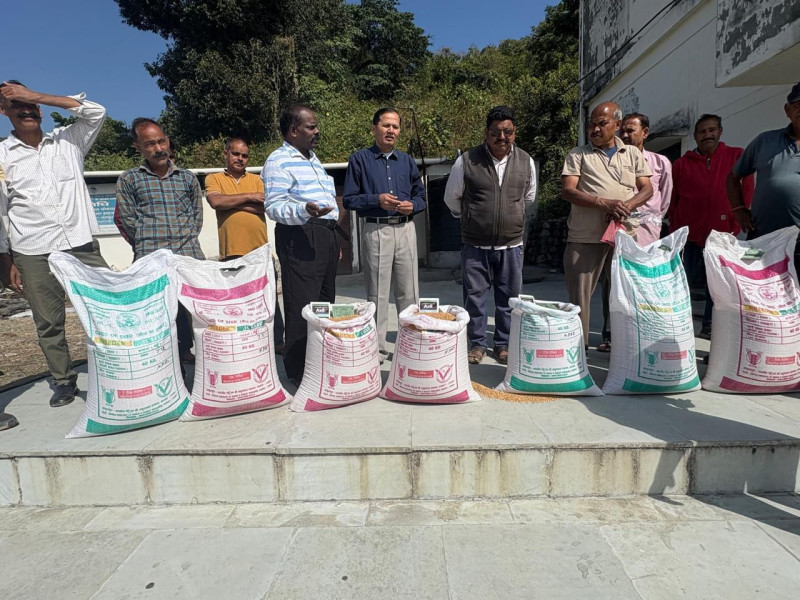
Dehradun, October 30, 2025 — In a significant step toward enhancing agricultural productivity in Uttarakhand, the ICAR–Indian Institute of Soil and Water Conservation (ICAR-IISWC), Dehradun, distributed newly developed wheat seed varieties to farmers in Raipur block of Dehradun district. The event, held under the “Farmer FIRST” initiative, saw the distribution of Truthful Label seeds of two advanced wheat varieties — DBW 371 and DBW 372 — to around 50 farmers, each receiving 20 kilograms for trial cultivation.
These high-yielding varieties were developed by the ICAR–Indian Institute of Wheat and Barley Research (IIWBR), Karnal, Haryana, and are recommended for cultivation across irrigated and rainfed regions of northern India, including Uttarakhand. The varieties are tailored to suit the agro-climatic conditions of the region and promise to significantly boost wheat productivity.
Dr. Banke Bihari, Principal Scientist and Principal Investigator of the project, highlighted the superior traits of the new varieties. “DBW 371 and DBW 372 possess high genetic potential, better nutritional quality, resistance to major diseases, and improved lodging tolerance,” he explained. “In the plains, these varieties can yield between 75–85 quintals per hectare, while in the Dehradun region, farmers can expect 40–50 quintals per hectare — a substantial increase compared to the 15–18 quintals typically produced by local varieties.”
In addition to grain yield, these varieties also produce an equal quantity of straw, which is beneficial for livestock feed, addressing fodder shortages in the region.
Dr. M. Muruganandam, Principal Scientist and Head of PME and Knowledge Management Unit, emphasized the importance of quality seeds and advised farmers to preserve seeds from their harvest for future sowing. “These varieties are not easily available in the open market and offer higher protein content and productivity,” he noted.
Dr. Abhimanyu Jhajharia, Scientist at ICAR-IISWC, elaborated on the economic and social benefits of adopting these improved varieties. “Increased yields will directly contribute to higher farm incomes and livelihood security,” he said.
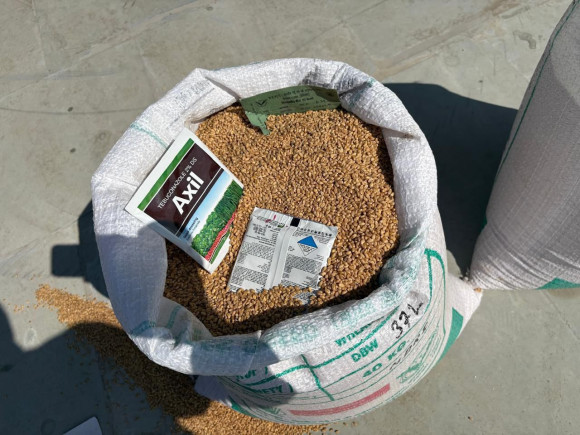
Farmers were also educated on best agronomic practices to maximize output. Recommendations included treating seeds with fungicide before sowing, early sowing between October 30 and November 20, first irrigation 35 days after sowing, timely weeding or use of herbicides like sulfosulfuron, and ensuring 5–6 irrigations during the crop cycle (though 3–4 may suffice in some cases).
To ensure proper use and seed multiplication, each beneficiary farmer signed an agreement outlining responsible usage and future seed exchange protocols.
The event also reviewed the success of previously introduced wheat varieties such as PBW 343 (for irrigated areas) and DBW 222, DBW 303, DBW 187, VL 967, and VL 953 (for rainfed areas), which have led to an impressive 80% seed replacement rate in the region over the past three years.
Farmers expressed enthusiasm for the new varieties and appreciated the efforts of ICAR-IISWC scientists and staff in improving local agricultural practices. The event was also attended by Mr. Kushal Pal Singh, representative of the Farmers Producer Organization (FPO) Kotimachak, and project staff members Mr. Malik and Mr. Vikas Kumar.