
 Dr. Shikha Mishra
Bihar Election Result And New Trend In Politics
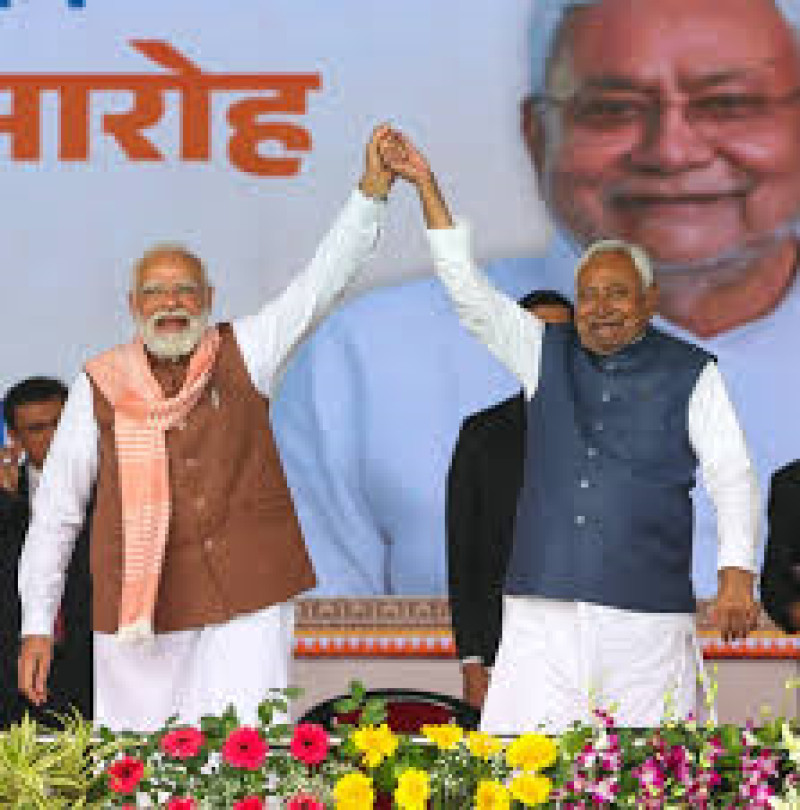
The recently concluded Bihar Assembly elections have delivered a resounding victory for the National Democratic Alliance (NDA), led by the Bharatiya Janata Party (BJP). Out of 243 seats, the NDA secured 202, marking a significant political mandate. However, beyond the numbers, the election results reflect a deepening trend across Indian states: the rising influence of welfare-centric promises in shaping voter preferences.
Traditionally, state elections have revolved around local issues. But in recent years, parties offering attractive freebies—whether at the national or regional level—have gained traction. This shift was first evident in Delhi’s 2013 Assembly elections, where the newly formed Aam Aadmi Party (AAP) won 28 seats and formed a government with Congress support. AAP’s promise of free electricity, later fulfilled, became a cornerstone of its popularity. By 2025, AAP had firmly entrenched itself in Delhi politics, despite the city’s fiscal health deteriorating from a surplus to a deficit budget.
Freebie Politics and Fiscal Fallout
Following Delhi’s example, several states have embraced similar populist strategies. In Himachal Pradesh, the Congress party came to power in 2022 by pledging restoration of the old pension scheme, ₹1,500 monthly support for adult women, and 300 units of free electricity per household. The implementation of these promises has strained the state’s already fragile finances, forcing it to borrow even for routine expenditures and interest payments.
In Bihar, Chief Minister Nitish Kumar launched the Mukhyamantri Mahila Rozgar Yojana just ahead of the elections. Announced on August 29, 2025, the scheme transferred ₹10,000 directly into the bank accounts of 1.21 crore women within a month. While hailed as a landmark initiative for women’s empowerment, questions linger over the state’s capacity to sustain such programs. Kumar has further pledged up to ₹2 lakh in support for women whose businesses succeed, aiming to uplift entire families through micro-entrepreneurship. Bihar, home to 1.4 crore active self-help group members, also has one of the highest rates of poverty and migration for employment.
Comparisons have been drawn with Uttar Pradesh, which has recently curbed migration by generating local employment opportunities. If Bihar can replicate this success, it could contribute significantly to national economic growth. Yet, the critical question remains: can Bihar afford such expansive welfare schemes?
Nationwide Trend and Economic Risks
Madhya Pradesh’s Ladli Behna Yojana, along with similar initiatives in Haryana, Maharashtra, Karnataka, Telangana, and Andhra Pradesh, underscores the nationwide spread of welfare-driven politics. Tamil Nadu, with its long history of freebie culture, has distributed high-value items like TVs, laptops, scooters, and bicycles during elections.
This trend, however, comes at a cost. Fifteen states have breached the legally mandated fiscal deficit ceiling of 3%. Himachal Pradesh’s deficit stands at 4.7%, Madhya Pradesh at 4.1%, Andhra Pradesh at 4.2%, and Punjab at 3.8%. Many states have slashed capital expenditure to accommodate rising subsidy bills. Between 2015–16 and 2022–23, capital spending declined by 51% across states, with Delhi (38%), Punjab (40%), Andhra Pradesh (41%), and West Bengal (33%) witnessing sharp cuts.
A Call for Fiscal Prudence
The Reserve Bank of India has flagged the deteriorating financial health of states like Punjab, Kerala, West Bengal, Himachal Pradesh, Rajasthan, Jharkhand, Bihar, and Delhi. Without timely reforms, these states risk insolvency. While the central government occasionally steps in with financial assistance, it cannot indefinitely shoulder the burden without compromising its own fiscal stability.
Experts argue that subsidies should be targeted and productivity-linked, not merely tools for electoral gain. There is an urgent need for regulatory frameworks to prevent fiscally unsustainable promises. Benefits should be directed at identified beneficiaries rather than blanket distributions, as seen in free electricity schemes offering 300–400 units to all households.
Ultimately, the burden of fiscal mismanagement falls on citizens, manifesting in cuts to essential services like education and healthcare. Sluggish economic growth further limits job creation, perpetuating the cycle of dependency and migration.
Conclusion
As welfare politics increasingly shape electoral outcomes, the long-term economic implications demand serious attention. Without corrective measures, the allure of freebies may push several states toward financial collapse, undermining both state and national development goals.
Disclaimer: This news is written on the basis of information received from different authentic sources.