
 Dr. Shikha Mishra
"Breaking the stigma"
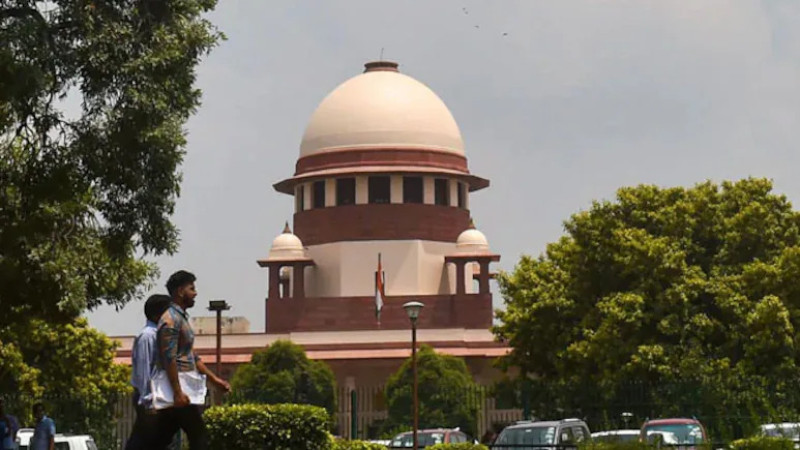
New Delhi: In a landmark ruling reinforcing the constitutional promise of dignity and equality, the Supreme Court on Friday held that the right to menstrual hygiene is an intrinsic part of the right to life under Article 21 of the Constitution, and issued binding directions to ensure functional toilets, sanitary napkins and comprehensive menstrual support systems in every school across the country.
A Bench of Justices JB Pardiwala and R Mahadevan said the absence of gender-segregated toilets and access to menstrual hygiene products deprives girls of “dignity, privacy, equality and meaningful access to education.” Menstrual health, the court asserted, cannot be treated as charity or left to policy discretion, as it flows directly from constitutional guarantees.
The verdict came on a petition seeking directions to the Union government to provide free sanitary pads and separate toilets for girls studying in Classes 6 to 12 in government-aided schools. Expanding the scope, the court ruled that all schools—government-run and private—must ensure adequate toilets, sanitary napkins, water, soap for handwashing, and spare uniforms for girl students.
The Bench framed and answered key constitutional questions, holding that the lack of separate toilets and menstrual hygiene products violates the right to equality (Article 14), the right to life and dignity (Article 21), and the right to free and compulsory education (Article 21A), read with the Right of Children to Free and Compulsory Education (RTE) Act, 2009.
“The inaccessibility of menstrual hygiene management undermines the dignity of the girl child and excludes her from equal participation,” the court said, emphasising that equality of opportunity requires the State to actively remove barriers that prevent girls from accessing education on the same footing as boys.
Linking dignity closely with privacy, the Bench noted that dignity has meaning only when individuals can live without humiliation, exclusion or avoidable suffering. Privacy, it said, imposes a positive obligation on the State—not merely to refrain from intrusion, but to actively protect it through necessary measures.
The court further held that access to safe, effective and affordable menstrual hygiene measures is essential to achieving the highest standard of sexual and reproductive health, and includes access to education and information on sexual health. The absence of toilets and menstrual support, it said, directly interferes with the right to education under Article 21A. All schools must comply with Section 19 of the RTE Act, failing which they risk derecognition.
Issuing three binding directions, the court ordered States and Union Territories to ensure that every school has functional, gender-segregated toilets with adequate water facilities, with all new schools designed to ensure privacy and accommodate the rights of persons with disabilities. It also mandated the availability of biodegradable sanitary napkins within toilet premises.
Additionally, the court directed governments to establish menstrual hygiene management systems in schools, including spare uniforms and essential materials to address menstrual emergencies.
“This judgment speaks not only to lawyers and administrators, but to classrooms where girls hesitate to ask for help, to teachers constrained by lack of resources, to parents unaware of the harm caused by silence, and to society at large,” the Bench observed.
Progress, the court concluded, must be judged by how society treats its most vulnerable. The verdict, it said, sends a clear message to every girl forced into absenteeism because her body became a burden: “The fault is not yours.”
NCERT, States dierected to Break Menstrual Taboos
India’s education authorities are pushing a bold reform. The National Council of Educational Research and Training (NCERT) and state councils have been instructed to embed gender‑responsive content into school curricula. Lessons will now address menstruation, puberty, and critical health issues such as PCOS and PCOD. The move aims to dismantle long‑standing stigma and silence around menstrual health and hygiene. By confronting taboos head‑on, policymakers hope to foster awareness, normalize conversations, and empower students with knowledge. The directive marks a decisive step toward inclusive education that prioritizes health, dignity, and equality for the next generation