
 Dr. Shikha Mishra
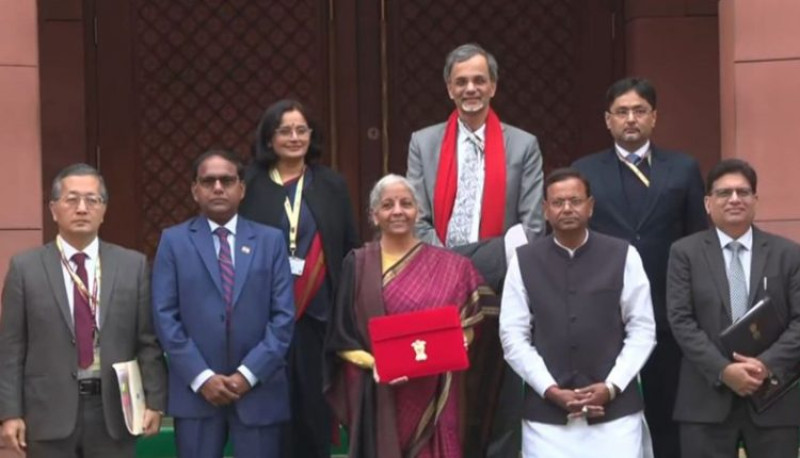
Union Budget 2026: Key Highlights
New Delhi: The Union Budget 2026 has laid out a comprehensive roadmap focused on economic stability, growth acceleration, job creation and inclusive development, while keeping a firm grip on fiscal discipline. The Budget reflects the government’s long-term vision of building a resilient and developed India by 2047.
A major highlight is the continued emphasis on fiscal consolidation. The fiscal deficit for 2026–27 has been estimated at 4.3 per cent of GDP, underlining commitment to responsible public finances. Total expenditure stands at ₹53.5 lakh crore, with a strong push to capital expenditure of nearly ₹26.1 lakh crore, aimed at crowding in private investment. The debt-to-GDP ratio is projected to fall to 55.6 per cent, improving macroeconomic credibility.
Manufacturing and Make in India received a decisive boost. The Budget announced a ₹10,000-crore Bio-Pharma Shakti Scheme over five years, alongside Semiconductor Mission 2.0 and a ₹40,000-crore electronics components incentive scheme. Chemical parks and rare-earth mineral corridors have been proposed to strengthen domestic supply chains and reduce import dependence.
In the textile and khadi sector, the government unveiled the National Fibre Policy, mega textile parks, and the Mahatma Gandhi Gram Swaraj initiative to promote khadi and handicrafts. These steps aim to boost rural employment, support artisans and enhance global branding of Indian textiles.
The Budget has reinforced support for MSMEs and startups through a proposed ₹10,000-crore SME Growth Fund and continued backing of the Atmanirbhar Bharat Fund. Special focus has been placed on developing skilled professional cadres in Tier-2 and Tier-3 cities to promote balanced regional growth.
Infrastructure and connectivity remain central, with public capital expenditure raised to ₹12.2 lakh crore. New dedicated freight corridors, 20 national waterways, seaplane services and a coastal cargo promotion scheme are expected to improve logistics efficiency. In urban transport, seven high-speed rail corridors, including Mumbai–Pune and Delhi–Varanasi, have been announced, along with a ₹5,000-crore provision for City Economic Regions.
On the social sector, the Budget announced training for one lakh allied health professionals, new AYUSH institutions, NIMHANS-2 for mental health, and fresh missions in tourism and sports.
For agriculture and rural development, the focus is on high-value crops, fisheries, animal husbandry, coconut development and special agricultural incentives for the Northeast to raise farmers’ incomes.
Significant tax reforms were also unveiled. A new Income Tax Act will come into effect from April 1, 2026, simplifying TDS-TCS provisions, extending timelines for revised returns, and easing compliance for small taxpayers.
Overall, Union Budget 2026 presents a balanced, future-oriented framework that combines fiscal prudence with strategic investments to drive sustainable and inclusive growth.