
 Dr. Shikha Mishra

CM Dhami & BJP Chief Nitin Nabin participate in Ganga Arti: A Calibrated Political Event

Dr Shikhha Mishra
Editor, Lead Reporting (English Weekly)
Ph.D. & M.Phil. in Journalism and Mass Communication
Editorial experience with—The Indian Express, The Pioneer & Hindustan Times
A seasoned journalist, senior media educator and researcher with 19+ years of experience
Author and Patent Holder
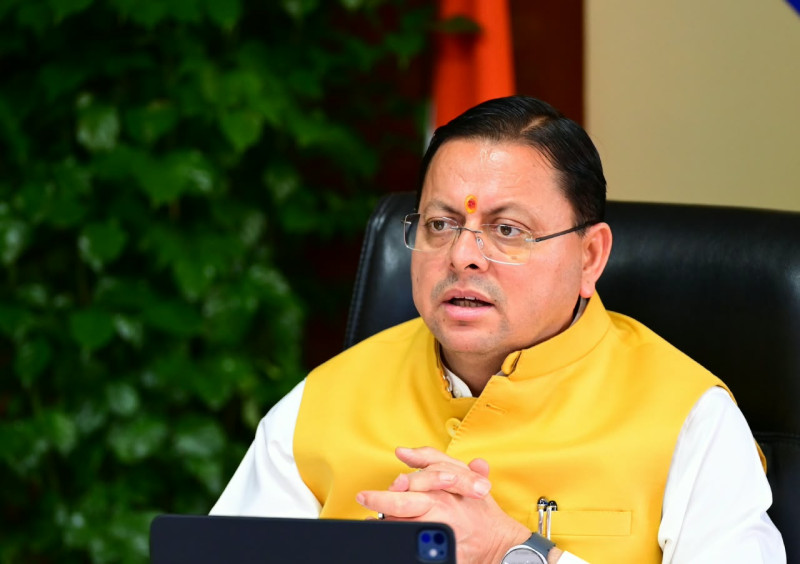
When Uttarakhand Chief Minister Pushkar Singh Dhami and BJP national president Nitin Nabin joined a grand Ganga aarti at Parmarth Niketan on 29 May, the event looked like devotional pageantry at first glance. But read closely, it was a calibrated political statement: faith celebrated within the bounds of law and order, spiritual capital leveraged for governance credibility, and a pre-emptive signal to voters ahead of the 2027 Assembly polls.
The apparent contradiction—and its intent
Just eight days earlier, Dhami had taken a hardline stance: “No religious activity will be allowed to block roads” in Uttarakhand; namaz must be offered only at mosques/Eidgahs or designated places, and inconvenience to the public will not be tolerated. That order drew attention for its strictness during the Char Dham Yatra season, when pilgrimage logistics and public mobility are critical.
Yet at Parmarth Niketan—a designated ashram/ghat space—the Chief Minister and the BJP chief performed a traditional Ganga aarti with Vedic chants, bhajans and rows of lamps, attended by senior akhara leaders and devotes. The contrast is not a contradiction; it is a doctrine. The message is deliberately bifurcated: public roads are for public movement; sacred spaces are for sacred practice. This “faith within law” framing protects the state from claims of secular overreach while asserting administrative authority over public order.
Why Parmarth Niketan—and why now?
Parmarth Niketan is Uttarakhand’s most visible spiritual platform: it hosts international yoga festivals and high-profile religious events, and it draws domestic and foreign tourists. By staging the aarti there, the CM and the BJP president—achieved three things:
Legitimacy through sanctity: The Ganga is framed as a “living stream of Indian culture and sanatan tradition,” and Uttarakhand as “Devbhoomi,” the soul of sanatan culture. This elevates the state’s cultural brand and aligns governance with civilizational identity.
Organizational reinforcement: Nitin Nabin’s three-day visit included reviews of BJP preparations for 2027; he publicly predicted BJP’s third consecutive term under Dhami, citing development and organisational strength. The aarti functioned as a high-visibility node in that campaign machinery.
Institutional convergence: The presence of Juna and Niranjani akhara mahamandaleshwars and the Akhil Bharatiya Akhara Parishad president signaled broad saffron-ecosystem consolidation—religious institutions, political leadership and administrative actors in one frame.
The acoustics of the speech: culture, conservation and confidence
Nitin Nabin’s remarks mapped neatly onto the BJP’s dual narrative of cultural confidence and developmental governance. He stressed that preserving the Ganga and India’s cultural heritage is a moral responsibility to future generations, a theme that links environmental stewardship to civilizational duty. Swami Chidanand Muni, the ashram head, echoed this by foregrounding Ganga conservation and environmental protection, while also noting India’s rising global stature under PM Narendra Modi and praising the state government’s cultural promotion.
The political calculus ahead of 2027
This is not just symbolism; it’s electoral strategy. Nabin’s confidence of a third term under Dhami is explicit, and the timing is deliberate: the visit came during a 3-day review of organisational issues and poll preparedness. The aarti served as a soft-power counterweight to the hard-edged road-order: it signals that the BJP is not anti-faith, but pro-order. In a state where religious identity is strong and pilgrimage is economic, that balance is politically vital.
Moreover, the presence of key political figures—Garhwal MP Anil Baluni, Rajya Sabha MP and BJP state president Mahendra Bhatt, cabinet minister Dhan Singh Rawat, local MLA Renu Bisht—placed the event inside the machinery of governance, not just devotion. That is a calculated display of unity between party and administration.
The broader context: yoga, tourism and the “spiritual economy”
Dhami has previously attended the International Yoga Festival at Parmarth Niketan and advocated for spiritual tourism. The Ganga aarti reinforces Uttarakhand’s branding as a global “spiritual capital,” which feeds directly into the yoga–wellness economy and pilgrimage revenue. In political terms, it converts cultural capital into development credibility: if the state can protect both faith and order, it can grow tourism and jobs.
The risk and the restraint
The road order drew scrutiny for its strictness; the aarti reins in that perception by showing respect for tradition. But the line is thin. If the state’s enforcement is seen as selective—or if religious communities feel targeted—the “faith within law” narrative can backfire. For now, the government has built in explicit respect for all faiths while insisting that roads remain unblocked. The challenge is implementation: consistent, non-discriminatory enforcement that avoids the appearance of majoritarian signaling.
Bottom line
The Parmarth Niketan aarti was less a ritual than a rhetorical device. It let Dhami and Nabin assert a coherent political philosophy: sanctity is sacred, public space is public. For voters, it offers reassurance that faith will be honoured—but not at the cost of civic order. For the party, it consolidates cultural capital ahead of 2027. In Uttarakhand’s politics, where devotion and development are often spoken in the same breath, this is the most effective dialectic around.